1717.2.2

Cross-Sector SDG Dialogue

Participation in conferences and multi-stakeholder dialogues involving governments and NGOs on SDGs.

Executive Summary

Al-Ahliyya Amman University (AAU) demonstrates a strong institutional commitment to cross-sectoral collaboration and dialogue as a core mechanism for advancing the United Nations Sustainable Development Goals (SDGs). The university recognizes that meaningful progress toward the 2030 Agenda requires open, continuous, and evidence-based communication among diverse stakeholders, including government agencies, non-governmental organizations (NGOs), industry leaders, academia, international networks, and civil society.

Through the leadership of the Sustainability & International Ranking Center, AAU actively participates in national and international SDG conferences, policy workshops, and multi-stakeholder forums designed to promote shared learning, capacity building, and strategic cooperation. These dialogues serve as critical platforms where the university’s experts present research findings, sustainability data, and policy recommendations, contributing to informed decision-making processes at multiple governance levels.

Between 2023 and 2025, AAU participated in major sustainability dialogues, including the UI GreenMetric International Workshop on SDGs in Higher Education (IWGM 2025 – Université Côte d’Azur, France), the QS Arab Sustainability Forum, the Jordanian National Conference on Climate Action, and the Arab Universities Network for Sustainable Development Annual Meeting. AAU also served as a host and co-organizer for several national SDG events in Jordan, bringing together ministries, municipal leaders, NGOs, academic researchers, and community organizations.

By institutionalizing its participation in SDG-focused conferences and multi-stakeholder dialogues, AAU reinforces its role as a regional hub for sustainability cooperation advancing SDG 17 through partnership-driven engagement, interdisciplinary dialogue, and evidence-based advocacy that contributes to national and regional sustainability strategies.
Centers and Departments

01Sustainability and International Ranking Center – Strategic Hub for SDG Partnerships

The Sustainability and International Ranking Center leads Al-Ahliyya Amman University’s (AAU) sustainability agenda and global engagement strategy. It coordinates all institutional partnerships related to the UN Sustainable Development Goals (SDGs), oversees sustainability reporting, and manages cooperation with international ranking bodies such as UI GreenMetric, THE Impact Ranking, and QS Sustainability. The Center acts as a bridge between AAU and government ministries, NGOs, and global organizations to promote research-driven policy collaboration and institutional excellence.

02Global Engagement Center – International Cooperation

The Global Engagement Center manages AAU’s international partnerships and global cooperation initiatives. It develops academic agreements, joint research projects, exchange programs, and cultural collaborations with universities, research institutions, and international organizations. The center enhances AAU’s visibility worldwide and supports SDG17 (Partnerships for the Goals) by fostering inclusive global dialogue, academic mobility, and intercultural understanding.

03Center for Innovation and Entrepreneurship – Cross-Sector Collaboration and Green Innovation

The Center for Innovation and Entrepreneurship fosters collaboration between academia, industry, and community sectors to promote sustainability-driven startups, ESG-based business models, and digital innovation. It supports training, mentorship, and incubator programs that empower students and faculty to develop innovative solutions aligned with SDG8 (Decent Work), SDG9 (Industry and Innovation), and SDG17 (Partnerships for the Goals).

04Hourani Center for Applied Scientific Research – Collaborative Scientific Research

The Hourani Center for Applied Scientific Research enhances AAU’s research capacity by supporting joint research projects, applied innovation, and interdisciplinary collaboration. The center partners with government agencies, health organizations, and private-sector institutions to conduct studies that address energy, environment, health, and technology – creating measurable outcomes that align with SDG9, SDG13, and SDG17.

05Pharmacological and Diagnostic Research Center – Scientific Cooperation for Public Health

The Pharmacological and Diagnostic Research Center promotes interdisciplinary and collaborative research in medical and pharmaceutical sciences. The center partners with health ministries, hospitals, and research institutions to improve public health outcomes, pharmaceutical innovation, and diagnostic technologies, contributing directly to SDG3 (Good Health and Well-Being) and SDG17.

06Hourani e-Learning Center – Digital Transformation and Inclusive Access

The Hourani e-Learning Center enhances accessibility and quality in education through digital learning solutions, online course design, and virtual classroom integration. It collaborates with ministries, NGOs, and international education networks to expand open education and lifelong learning, supporting SDG4 (Quality Education) and SDG17 (Partnerships for the Goals) through digital inclusion.

07Teaching and Learning Center – Academic Development and Knowledge Exchange

The Teaching and Learning Center supports faculty development, modern pedagogy, and cross-institutional learning. By hosting workshops, seminars, and joint training programs with regional and international institutions, it fosters collaborative teaching excellence and strengthens the role of higher education in achieving SDG4 and SDG17.

08Women’s Health Center – Health Promotion and Gender Partnerships

The Women’s Health Center promotes community well-being and gender equality through health programs, awareness campaigns, and partnerships with NGOs, health ministries, and social development organizations. It plays a vital role in advancing SDG3 (Good Health), SDG5 (Gender Equality), and SDG17 (Partnerships for the Goals) by integrating education, healthcare, and empowerment initiatives.

09Al-Ahliyya Amman Center for Consultations and Psychological Care – Community Well-being Partnerships

The AAU Center for Consultations and Psychological Care provides psychological support, counseling, and community-based interventions. It partners with governmental health bodies, schools, and NGOs to improve mental health awareness and provide accessible psychological care. This directly supports SDG3 (Good Health) and SDG17 (Partnerships for the Goals).

10Center for Oral Diseases Studies – Academic and Clinical Collaboration

The Center for Oral Diseases Studies focuses on oral health research, preventive care, and clinical training in collaboration with national health institutions and dental organizations. Through its partnerships with hospitals, clinics, and health NGOs, it supports SDG3 (Health) and SDG17 (Partnerships) by translating research findings into practical community health benefits.

11Language Center – Cross-Cultural and Educational Cooperation

The Language Center enhances linguistic and intercultural communication skills for students and the broader community. It collaborates with international language institutions, embassies, and NGOs to organize workshops, proficiency exams, and cultural exchange programs that promote SDG4 (Education) and SDG17 (Global Partnerships).

12Hearing and Speech Center – Accessibility and Inclusion Partnerships

The Hearing and Speech Center provides diagnostic, therapeutic, and training services for individuals with hearing or speech disorders. The center collaborates with medical institutions, rehabilitation NGOs, and community schools to promote accessibility and social inclusion, advancing SDG3 (Health), SDG10 (Reduced Inequalities), and SDG17 (Partnerships).

Activities

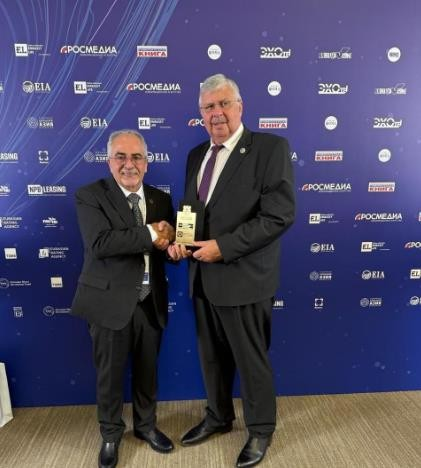
01AAU Participates in the First World Public Assembly in Moscow – Global Dialogue on Sustainable Development

Al-Ahliyya Amman University (AAU) participated in the First World Public Assembly held in Moscow, which brought together representatives from governments, international NGOs, and universities to discuss sustainable development challenges and higher education’s role in achieving the SDGs. AAU’s engagement reflects its commitment to multi-stakeholder global dialogue, knowledge sharing, and international cooperation aligned with SDG17 (Partnerships for the Goals).

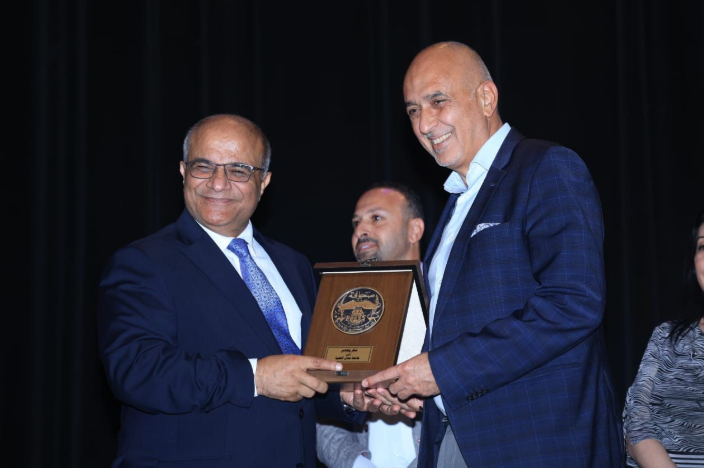
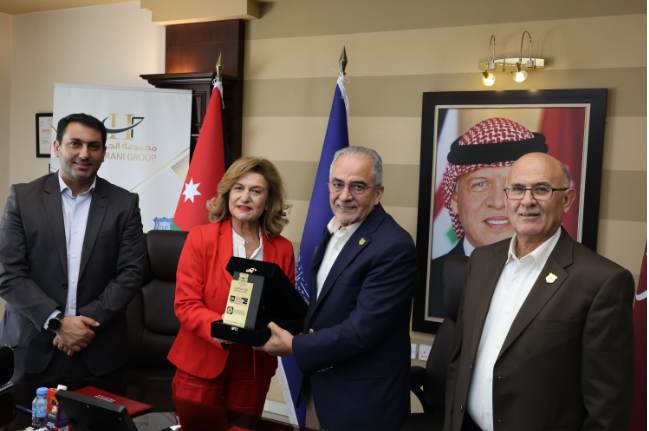
02Jordan Press Association Honors AAU – Partnership Promoting Media, Education, and Public Awareness

The Jordan Press Association honored Al-Ahliyya Amman University for its active cooperation in promoting education, public communication, and media freedom. The ceremony gathered media professionals, educational leaders, and civil-society representatives, highlighting AAU’s role in strengthening dialogue between academia and national institutions for inclusive, informed societies supporting SDG16 (Peace, Justice) and SDG17 (Partnerships for the Goals).

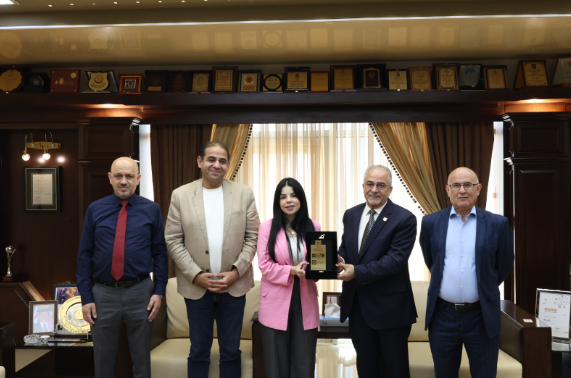
03President of AAU Receives Egyptian Delegation to Explore Academic and Scientific Cooperation

AAU hosted a high-level Egyptian delegation to discuss opportunities for joint academic programs, regional research collaboration, and policy exchange in the Arab higher education sector. The meeting served as a regional dialogue platform connecting universities and government representatives to advance knowledge diplomacy and SDG integration contributing directly to SDG17 (Partnerships for the Goals).

04Memorandum of Understanding between AAU and Al-Hussein Society for Training and Inclusion

AAU signed an MoU with Al-Hussein Society, a leading national NGO supporting individuals with disabilities, to enhance inclusive education, awareness, and accessibility. This partnership exemplifies cross-sector collaboration between higher education and civil society, ensuring the integration of inclusion principles within academic and community frameworks supporting SDG4 (Quality Education), SDG10 (Reduced Inequalities), and SDG17 (Partnerships for the Goals).

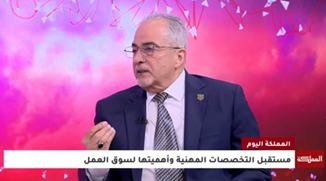
05Al-Mamlaka TV Interviews AAU President – National Dialogue on Technical Education and Labor Market

AAU President Prof. Sari Hamdan participated in a televised national dialogue on technical and vocational education broadcasted by Al-Mamlaka TV, in cooperation with government ministries and educational organizations. This participation contributed to a multi-sector policy discussion addressing future labor market needs and sustainable education systems, advancing SDG4 (Quality Education) and SDG17 (Partnerships for the Goals).

Impact Evaluation & Development Plan

A

Performance Evaluation

AAU demonstrates strong and credible performance in facilitating cross-sector SDG dialogue through its active participation in nationally and internationally recognized events. Between 2023 and 2025, the university engaged in a series of multi-stakeholder activities involving government entities, NGOs, international organizations, media institutions, and regional academic partners. These engagements reflect AAU’s commitment to promoting evidence-based dialogue, collaborative problem-solving, and inclusive policy development aligned with the UN Sustainable Development Goals.

The Sustainability & International Ranking Center documents each activity through the AAU SDG Engagement Register, which records event objectives, key stakeholders, and resulting follow-up actions. Faculty leaders, administrative representatives, and academic experts participated in these events, presenting university initiatives and contributing to national and regional discussions on sustainable development, education, inclusion, and community well-being.

Notable cross-sector SDG dialogues and events include:
  1. Participation in the First World Public Assembly in Moscow AAU joined global institutions in a high-level international dialogue on sustainable development, public policy, and cross-border cooperation. The event enabled the university to exchange perspectives on SDG implementation at the global level and strengthen its international engagement in public diplomacy and sustainable governance.
  2. Jordan Press Association Honors AAU This national-level recognition highlighted AAU’s role in advancing media partnerships, public awareness campaigns, and education for sustainable development. The event provided a platform for dialogue on the intersection of journalism, education, and SDG-related societal impact.
  3. AAU Receives Egyptian Delegation for Academic and Scientific Cooperation The meeting facilitated regional dialogue on joint research, institutional capacity building, and shared sustainability priorities. Discussions covered themes such as innovation, inclusive education, and expanding regional academic partnerships.
  4. MoU Between AAU and Al-Hussein Society for Training and Inclusion This collaboration strengthened cross-sector cooperation on social inclusion, accessibility, and community empowerment – directly supporting SDG 10 (Reduced Inequalities) and SDG 17 (Partnerships). The dialogue surrounding the MoU emphasized mutual learning and a shared commitment to inclusive development.
  5. Al-Mamlaka TV Interviews AAU President Through a nationally televised dialogue, AAU contributed to public discussions on technical education, workforce development, and national priorities linked to sustainable economic growth. The interview increased public awareness and highlighted AAU’s leadership in providing policy-relevant insights aligned with SDG 4 and SDG 8.
B

Development Actions

Target (2025–2028): Strengthen AAU’s participation in national and regional SDG dialogues by expanding cross-sector partnerships, increasing faculty and student involvement, and enhancing the documentation and impact assessment of all SDG-related engagements.

  • Action 1: Consolidate the AAU Cross-Sector Engagement Framework (2025–2026) Develop a unified institutional mechanism that coordinates and documents participation in national and regional SDG dialogues, including events involving ministries, NGOs, media institutions, and international partners. This framework will enhance consistency, reporting quality, and institutional visibility.
  • Action 2: Expand Participation in National SDG Platforms (2025–2027) Increase AAU’s representation in national conferences, ministerial roundtables, and NGO-led sustainability forums – such as climate action meetings, education reform dialogues, and renewable energy initiatives – by encouraging participation from academic leaders, researchers, and student ambassadors.
  • Action 3: Strengthen Regional Academic Cooperation (2025–2028) Build on existing collaborations, such as the Egyptian delegation visit and the Arab Universities Network for Sustainable Development, by initiating joint workshops, co-authored policy papers, and cross-border research discussions focusing on shared SDG priorities.
  • Action 4: Establish an Annual AAU Multi-Stakeholder Dialogue Session (Starting 2026) Organize one annual event at AAU bringing together ministries, professional associations, NGOs, media partners, and academic experts to discuss national sustainability priorities such as green skills, climate resilience, water security, and inclusive development. This action builds directly on AAU’s existing partnerships (e.g., Jordan Press Association, Al-Hussein Society, Al-Mamlaka TV).
  • Action 5: Enhance Digital Documentation and Impact Tracking (2025–2027) Develop an internal digital system within the Sustainability & International Ranking Center to archive event participation, key recommendations, policy contributions, and follow-up actions. This system will support THE Impact Ranking evidence requirements and strengthen long-term monitoring.
C

Benchmarking & Best Practice

Benchmarking Reference: AAU benchmarks its cross-sector SDG dialogue practices against leading international institutions recognized for their excellence in government, academia, and civil society collaboration. In particular, AAU aligns its framework with the University of Cambridge’s Centre for Science and Policy (UK) and the University of Cape Town’s Development Policy Research Unit (South Africa), both distinguished for transforming academic research into actionable policy and structured multi-stakeholder dialogue. These institutions serve as global models for integrating evidence-based research with national and regional sustainability strategies.

Adopted Practice: Drawing on these models, AAU applies a structured multi-level engagement methodology that combines policy advocacy, research presentation, institutional partnership-building, and capacity development. AAU follows a practice of producing formal policy briefs, documenting key recommendations, and preparing follow-up impact notes for SDG-related dialogues and conferences. These outputs are shared with governmental bodies, NGOs, and professional associations to ensure that each engagement contributes measurable value to national and regional sustainability agendas.

Local Adaptation: AAU adapts international best practices to the Jordanian and regional context by prioritizing policy themes such as climate-change adaptation, renewable-energy governance, water security, digital inclusion, social equity, and green entrepreneurship. The university collaborates closely with the Ministry of Environment, the Jordan Engineers Association, the Ministry of Higher Education, and the Arab Universities Network for Sustainable Development to align dialogue outcomes with national strategies and Arab League sustainability frameworks. This ensures that global models are meaningfully translated into context-specific, locally relevant actions.

Future Benchmark Goal (2025–2028): AAU aims to establish the AAU Center for SDG Dialogue and Collaboration, a specialized regional hub for sustainability diplomacy and multi-stakeholder engagement. The center will host annual high-level forums, publish the AAU Dialogue Impact Report, develop regional policy guidance notes, and train young leaders in cross-sector negotiation, SDG governance, and evidence-based decision-making. This long-term benchmark will position AAU as one of the leading conveners of policy-oriented SDG dialogue in the Arab region.

View the 2026 edition of this pageRES.AM_ V.01_29 Oct 2026

Contact Office On

  • Email: sdo@ammanu.edu.jo
  • Phone: +962 5 3500211
  • Extension: 2060
  • Address: Al-Ahliyya Amman University / Amman-Jordan- Al Salt Road / Zip-Code (Postal Address): (19328)
  • Fax: +962 6 5336104

Al-Ahliyya Amman University

Email: Public@ammanu.edu.jo


© Copyright Al-Ahliyya Amman University. Amman, Jordan 19111.