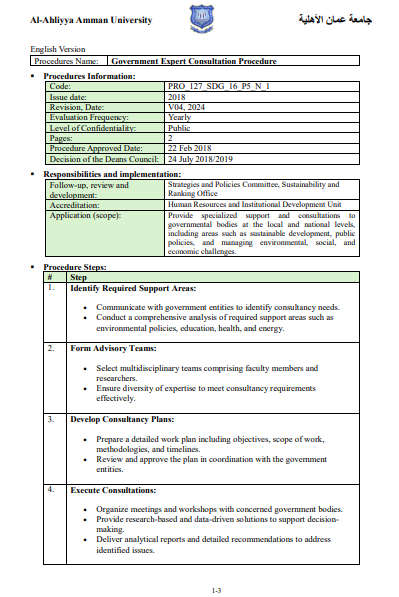
01Sustainability and International Ranking Center (SIRC)
Monitors transparency indicators and governance performance. Publishes verified data and public reports on institutional integrity.
Public reporting on university progress and performance related to SDG16 (Peace, Justice and Strong Institutions).
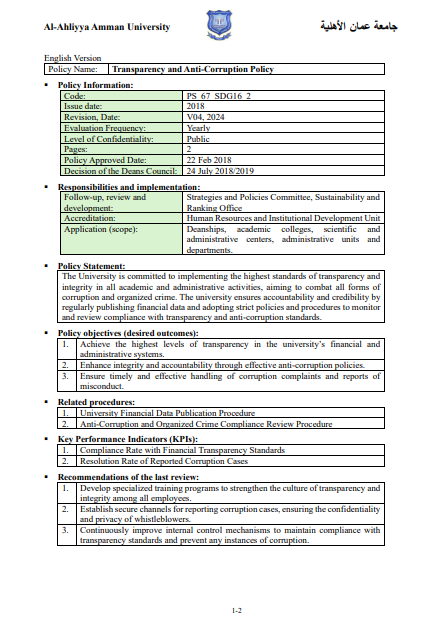
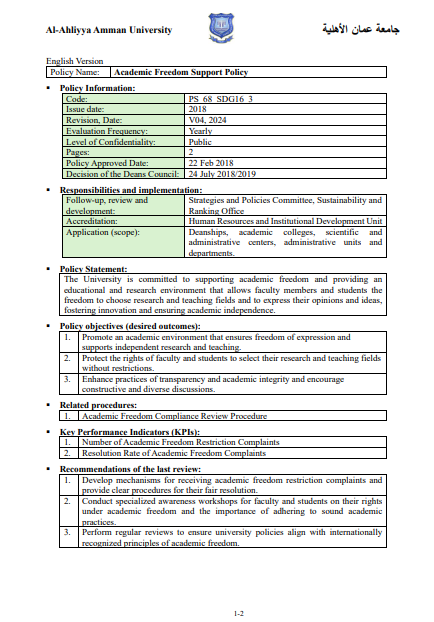
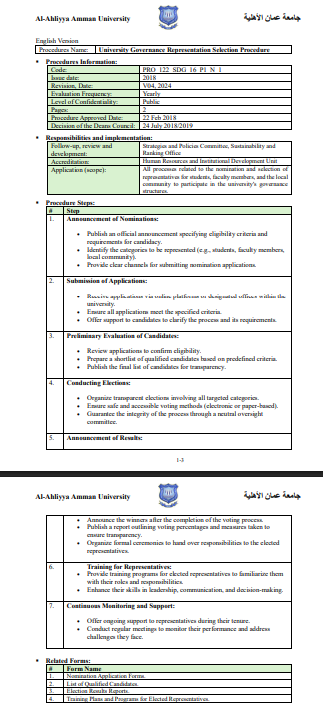
Al-Ahliyya Amman University (AAU) is strongly committed to advancing peace, justice, transparency, and good governance in alignment with SDG 16 Peace, Justice and Strong Institutions. The University integrates principles of ethics, accountability, anti-corruption, institutional integrity, and civic participation across academic, administrative, and community engagement systems.
Through the Sustainability & International Ranking Center (SIRC), AAU ensures that all SDG16-related indicators, including governance policies, civic initiatives, transparency measures, youth empowerment activities, and ethics-based procedures, are systematically collected, verified, and publicly reported through the Sustainability Portal, Annual Sustainability Report, and Executive Sustainability Report.
Between 2023 and 2025, AAU achieved measurable progress in SDG 16 through:This approach directly contributes to SDG 16 targets (16.3–16.10) and aligns fully with Jordan’s National Integrity and Anti-Corruption Strategy (2020–2025) and National Youth Empowerment Programme.
These practices reinforce AAU’s commitment to openness and good governance.
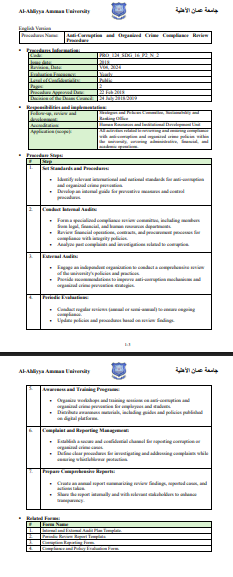
2. Ethics, Anti-Corruption, and Compliance MechanismsAAU enforces clear standards of ethics, anti-corruption, and academic integrity through:
These mechanisms ensure accountability, ethical conduct, and adherence to both institutional and national integrity standards.
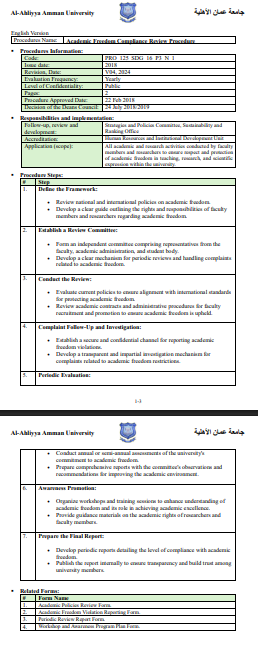
3. Human Rights, Justice, and Civic EducationAAU integrates ethics, justice, governance, and human-rights education across its curricula and community programmes through:
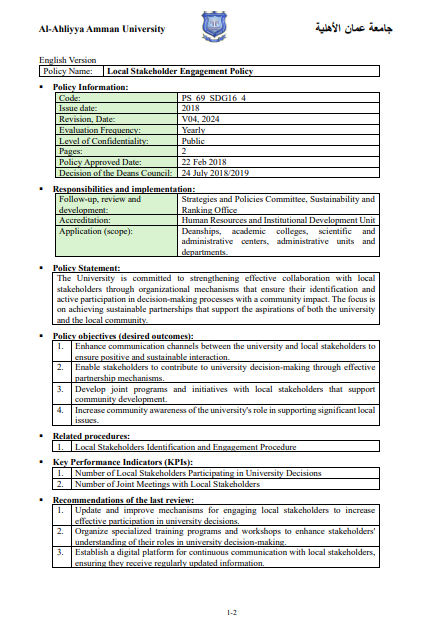
AAU actively promotes youth engagement in national dialogue through programmes such as:
These activities strengthen SDG 16.7 (inclusive decision-making) and national civic participation.
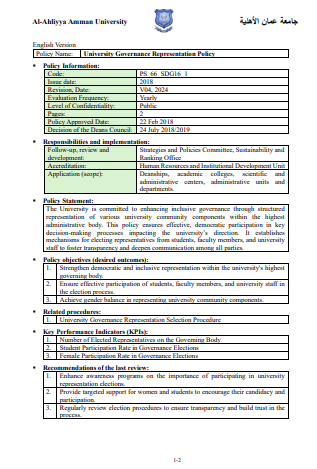
5. Public Accessibility of Policies and ReportsAll governance policies, compliance procedures, and SDG-related reports undergo:
This ensures external verifiability and full transparency.
Develop an online dashboard presenting AAU’s governance structure, policies, representation mechanisms, and compliance data. Target: Launch by 2026 with quarterly updates.
Support student involvement in civic dialogue, public policy, and national debate through structured engagement events. Target: 500 participants annually.
Conduct ongoing training for staff and students on ethical governance, transparency, and preventing corruption. Target: Two training sessions per semester; results publicly shared.
Establish a research unit on peacebuilding, justice, governance policy, and civic responsibility. Target: 10 peer-reviewed publications annually; open-access outputs.
Publish an annual report documenting anti-corruption measures, governance performance, and ethics compliance. Target: First edition published in 2025; annual release onward.
These institutions are recognised for transparent ethics reporting, civic engagement integration, and strong governance systems.
Adopted Global Best Practices:This ensures that global best practices are implemented within national governance, legal, and civic frameworks.
Future Goal (by 2028)Establish the AAU Center for Peace, Governance, and Civic Responsibility, serving as a national and regional hub for:
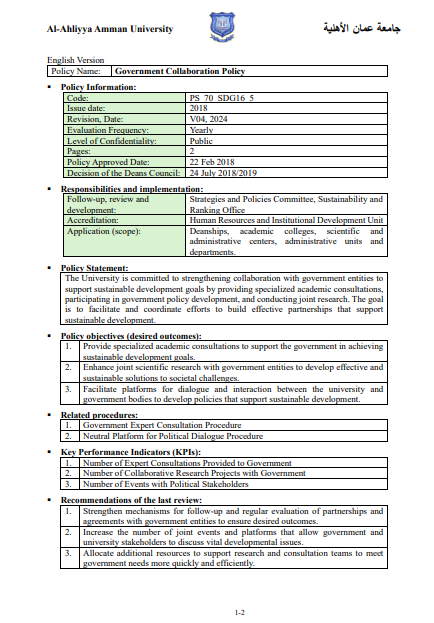
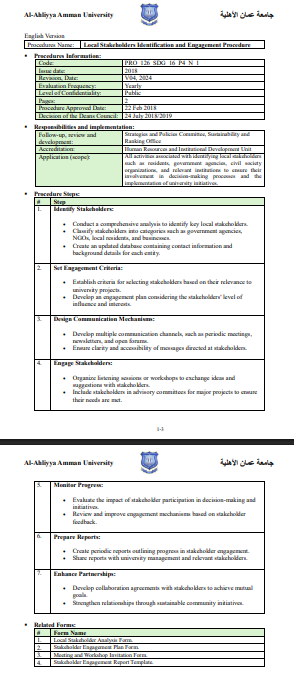
At Al-Ahliyya Amman University (AAU), SDG 16 governance is coordinated through a transparent institutional framework led by the Sustainability & International Ranking Center (SIRC) in close collaboration with:
SIRC consolidates SDG 16 indicators, including governance integrity, youth engagement, academic freedom, stakeholder involvement, anti-corruption measures, and compliance data. These indicators are:
This system ensures that AAU’s contributions to peace, justice, and strong institutions are measurable, verifiable, transparent, and publicly accessible, aligning with UN SDG 16 targets (16.3–16.10) and SDG 17 (Partnerships for the Goals).
Through strong governance practices, civic education, community engagement, and ethical leadership, AAU demonstrates a clear institutional commitment to cultivating peaceful, inclusive, and accountable societies at the university, national, and regional levels.
Contact Office On

Al-Ahliyya Amman University