Program Description

Digital Media and Graphic Design


Bachelor


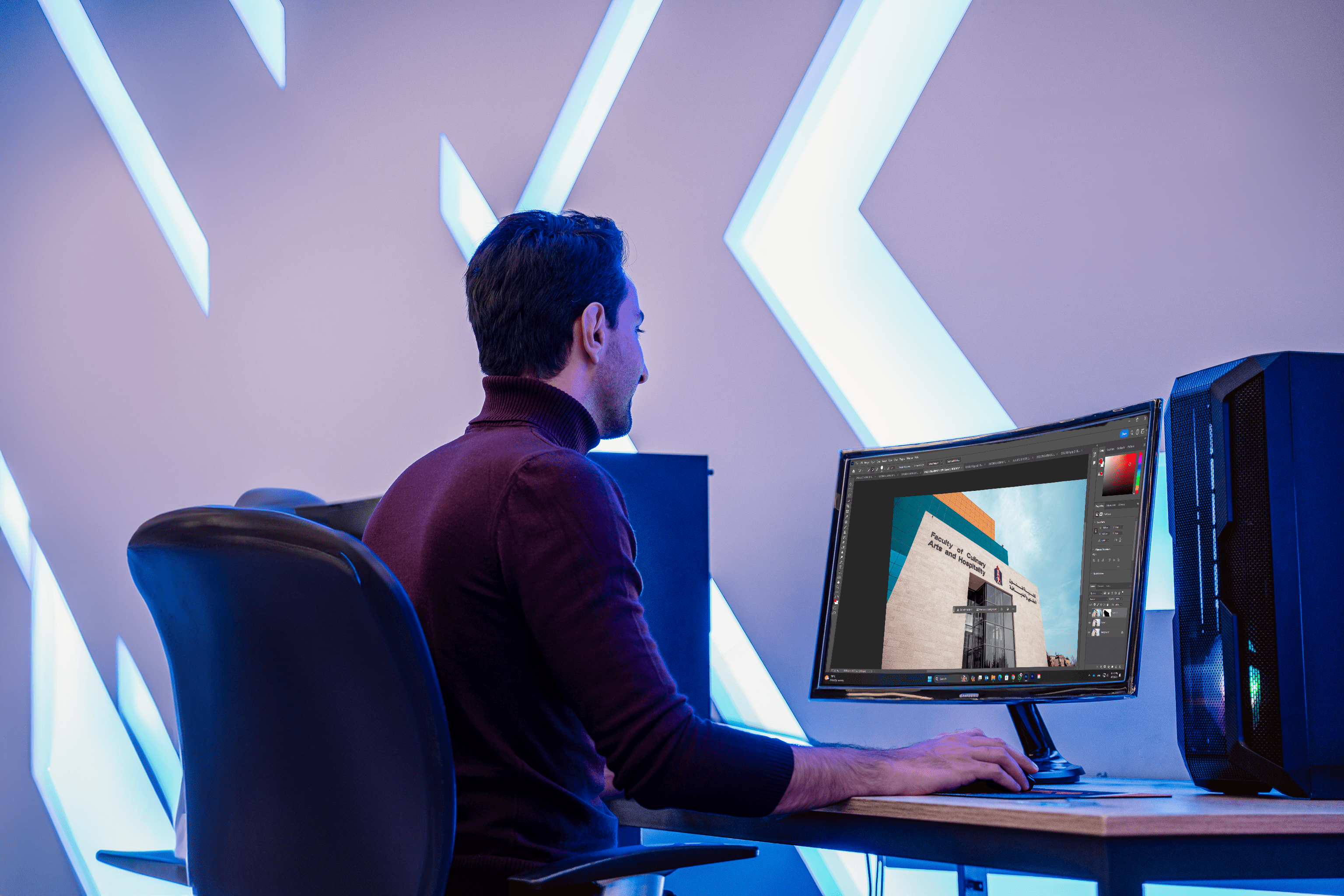
The Digital Media and Graphic Design Program aims to prepare designers specialized in developing digital visual communication solutions that integrate artistic creativity with technical proficiency, within an academic framework aligned with international standards in design. The program adopts an integrated design approach focused on the development of digital and interactive visual media, as well as the construction of visual identities and communication systems for brands and institutions across digital and print platforms. It seeks to cultivate students’ abilities in critical and creative thinking, design research, and the analysis of user and client needs, in addition to formulating effective visual strategies that reflect brand values and enhance their presence. The program further develops students’ skills in employing contemporary technologies and artificial intelligence within design processes, while fostering sustainable practices and an entrepreneurial mindset in the field of design, thereby enabling graduates to integrate effectively into design studios, branding and visual production companies, and digital development environments, and to advance their capacity for lifelong learning within the creative industries sector.

Digital Media and Graphic Design

Number Of Credit Hours
135

4 (1)

Admission Requirements

Admission requirements of the Digital Media and Graphic Design program include a High School Certificate or equivalent in the following:

60%

  • Scientific
  • Scientific - Medical Field
  • Scientific - Engineering Field
  • Scientific - Pure Sciences Field
  • Literary
  • Comprehensive Health Education
  • Informatics Administration
  • Sharia

Job Opportunities

job-oppo
  • Work in advertising agencies, printing houses, newspapers and magazines.
  • Graphic designer or Multimedia designer.
  • Digital game design, 2D and 3D animation.
  • Website design.
  • Production of interactive learning media in various educational fields.
  • Apps Design (UI,UX).
  • Video Editing.
  • Visual Identity designer.

Study Plans and Program Files

Educational Objectives

study-plans

Program Educational Objectives (PEOs)

Graduates of the Digital Media and Graphic Design Program are expected—within three to five years of graduation—to be able to:

PEO 1: Apply advanced artistic and technical knowledge and skills to develop innovative design solutions in visual communication and digital media across diverse and integrated contexts.

PEO 2: Engage effectively in multidisciplinary professional environments, leading or contributing to collaborative design projects grounded in innovation and responsiveness to evolving market demands.

PEO 3: Demonstrate a sustained commitment to ethical and professional standards in design practice, including respect for intellectual property, adherence to quality benchmarks, and meaningful societal contribution.

PEO 4: Pursue continuous learning and professional development by staying abreast of emerging technological and aesthetic trends and engaging in advanced studies or specialized training opportunities.

PEO 5: Employ critical and analytical thinking to examine the cultural, environmental, and social dimensions of design, contributing to the development of impactful, human-centered, and sustainable solutions.

PEO 6: Utilize communication strategies and digital technologies effectively to convey ideas across diverse media platforms, with thoughtful consideration of user experience and audience engagement.

PEO 7: Contribute to the development of media products and services within visual, interactive, and time-based environments, responding adaptively to advancements in media technologies and shifts in user behavior.

PEO 8: Exhibit entrepreneurial leadership within the creative industries by initiating independent design ventures that integrate artistic excellence, market awareness, and strategic vision.


Learning Outcomes at Program Level (PLO's)

PLO 1: Analyze visual, aesthetic, and theoretical frameworks within the fields of fine arts, digital design, and multimedia, situating them within contemporary artistic and cultural contexts.

PLO 2: Critically evaluate the historical evolution of design and its applications across diverse social, cultural, and technological environments, deriving informed insights that enrich contemporary practice.

PLO 3: Demonstrate advanced proficiency in the use of digital tools and specialized software to produce innovative visual and interactive content in accordance with professional standards.

PLO 4: Design and develop effective visual communication campaigns that respond to user needs and reflect a strategic understanding of message objectives and media platforms.

PLO 5: Generate innovative design solutions through the integration of emerging technologies and artificial intelligence applications, while upholding principles of sustainability and human-centered experience.

PLO 6: Collaborate effectively within multidisciplinary teams, assuming professional responsibility in project management and the achievement of shared objectives.

PLO 7: Present design concepts and projects through diverse visual media, ensuring clarity of content and responsiveness to the context and expectations of target audiences.

PLO 8: Assess the social, cultural, and ethical implications of design practice, making informed professional decisions that reinforce the transformative role of design in serving society.


National Qualifications Framework (NQFs)


Sustainable Development Goals (SDGs)
study-plans

Learning Outcomes at the Level of Specialization (CLO's)


  1. Obtain initial design strategies, theories and methods.
  2. Apply analysis and critical judgment, which deals with the aesthetic aspects and technical requirements for the implementation of multimedia and graphic design and the different needs of the project.
  3. Reconciling design variables and integrating areas of knowledge in expressing creative ideas in multimedia and graphic design.
  4. To test the capabilities of the design proposals and raise them to an advanced design level.
  5. Resolve design proposals to allow it to be demonstrated.
  6. Develop confidence using communication, presentation and oral skills.
  7. Use the necessary tools and techniques to implement the design.
  8. Training on the use and development of competitive methods and solutions for multimedia and graphic design and contemporary technologies.
  9. Definition of the multimedia and graphic designers role and responsibilities in the design team.
  10. Perform economic analyzes and cost estimates related to the design.
  11. Produce technical documents that enable the realization of a multimedia and graphic design proposal in a compact format.
  12. Define personal value systems and ethical attitudes in response to the requirements of a multimedia and graphic design project.
  13. Recognize the social and ethical responsibilities that affect the production of multimedia and graphic designs.

=

Correlation of learning outcomes at PLO's with CLO's


Al-Ahliyya Amman University

Email: Public@ammanu.edu.jo


© Copyright Al-Ahliyya Amman University. Amman, Jordan 19111.