







Program Description

Computer Science


Bachelor


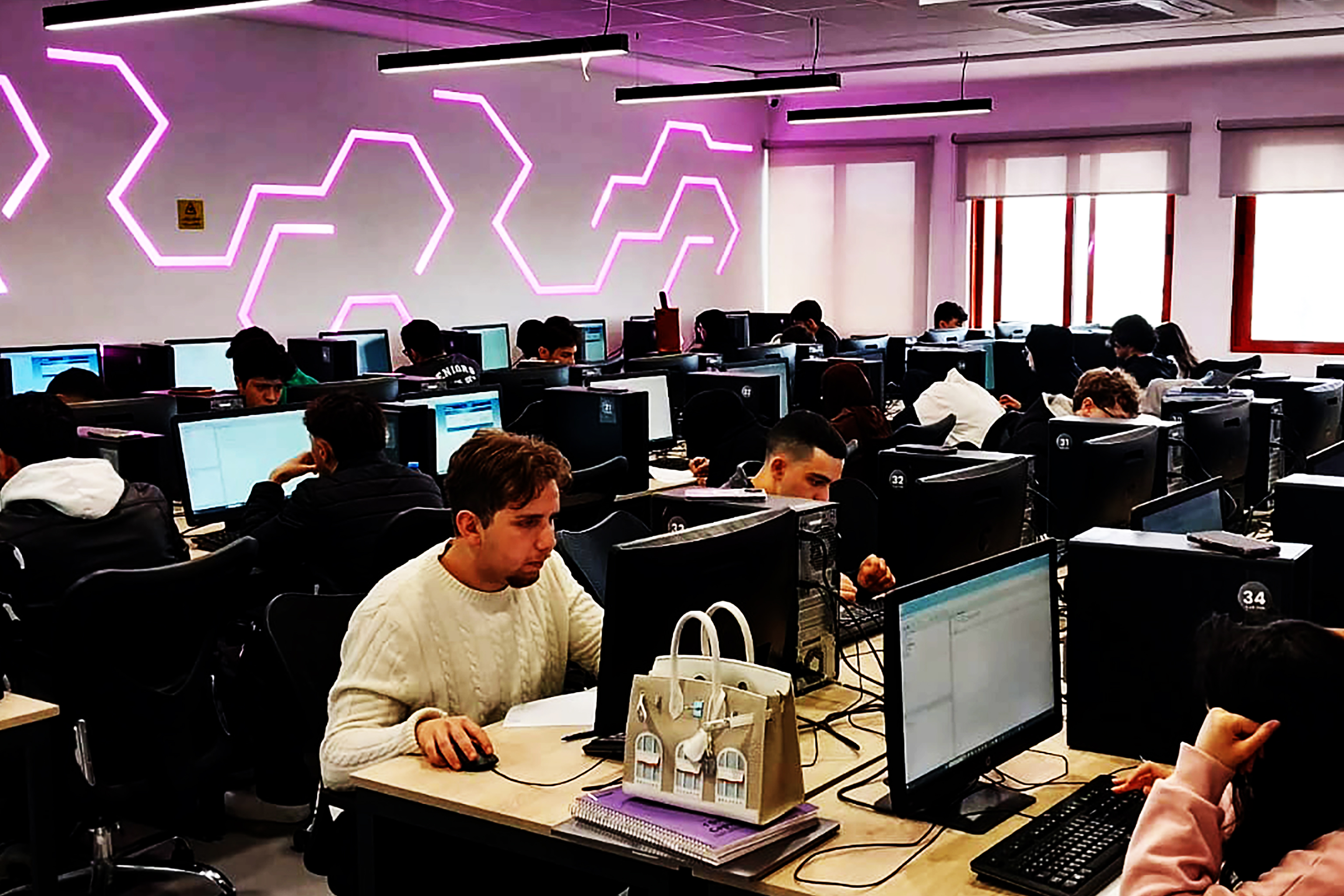
The Department of Computer Science was established in 1991 with the aim of supplying local and regional markets with distinguished graduates who possess scientific knowledge and practical experience in the field of computer science. The department aligns with the vision of the College of Information Technology, which seeks to provide distinguished education in an innovative environment that keeps up with the latest developments. It equips students with technical knowledge and leadership skills that meet labor market needs and keep pace with ongoing changes in the field.

Students earn a Bachelor’s degree in Computer Science upon completing all the required and elective courses, totaling 132 credit hours. The program is designed in accordance with international standards for curriculum development in computing and information technology. The college aims, through the Computer Science program, to meet the growing local, regional, and global demand for qualified students in the fields of computer science and its applications. This is achieved by providing practical teaching and training methods that are continuously improved and developed to stay current with the latest scientific and technological advancements.

As part of the college's educational outcomes, the Computer Science program focuses on providing a blend of theoretical knowledge and practical skills through carefully chosen core courses that form a solid foundation for students. These courses include Introduction to Programming, Systems Analysis and Design, Databases, Operating Systems, Internet Applications Development, Mobile Applications Development, Computer Networks, Cybersecurity, and Data Science, as well as the Graduation Project and Practical Training. These courses also include practical laboratories that provide students with the necessary skills to apply their knowledge in real-world settings. Additionally, community service is an essential part of the program, where students are required to complete 10 hours of community service as a graduation requirement, promoting their role in community service and contributing to sustainable development.

Upon graduation, students are equipped not only with academic knowledge but also with the practical skills that support the college's goals of achieving leadership in education and training aligned with labor market needs, while supporting sustainable development through active community engagement and technological innovation.

 

Computer Science

Number Of Credit Hours
132

4 (1)

Admission Requirements

Admission requirements of the Computer Science program include a High School Certificate or equivalent in the following:

60%

  • Scientific
  • Scientific - Medical Field
  • Scientific - Engineering Field
  • Scientific - Pure Sciences Field
  • Comprehensive Health Education
  • Informatics Administration
  • Industrial
  • Household Economy
  • Agricultural

Job Opportunities

job-oppo
  • Software Developer – Design, develop, and maintain software applications for various platforms.
  • Systems Analyst – Analyze and design information systems to meet the business needs of organizations.
  • Web Developer – Create and maintain websites and web applications using front-end and back-end technologies.
  • Mobile App Developer – Design and develop mobile applications for iOS and Android devices.
  • Game Developer – Design, develop, and test video games for various platforms.
  • IT Consultant – Provide expert advice on how to improve and implement technology solutions for businesses.
  • DevOps Engineer – Automate and streamline development, testing, and deployment processes in the software development lifecycle.
  • Full Stack Developer – Work on both the front-end and back-end of web applications, integrating various systems and technologies.
  • Database Administrator (DBA) – Manage and organize data, ensuring databases run efficiently, securely, and are accessible when needed.
  • Database Developer – Design, create, and maintain databases, writing efficient SQL queries and optimizing database performance.

Study Plans and Program Files

Educational Objectives

study-plans

Program Educational Objectives (PEO's):


  • PEO-1- Professional Success: Graduates will succeed in the field of computer science by working in areas such as software development, databases, distributed systems, and networking, applying their ability to solve complex problems and contribute to technological innovation.
  • PEO-2- Continuous Professional Development: Graduates will demonstrate professional growth through continuous learning, specializing in emerging fields such as artificial intelligence, data science, or other advanced technologies, and contributing to research and graduate studies.
  • PEO-3- Innovative Contributions: Graduates will contribute to the development of innovative computing solutions that address societal challenges and keep pace with technological advancements, leveraging their knowledge to meet both industry and community needs.
  • PEO-4- Effective Communication and Ethical Leadership: Graduates will communicate effectively and work collaboratively within multidisciplinary teams, while upholding high ethical standards in their professional endeavors.


PEO 

Key Points in the Mission 

Mapping between Mission and PEO 

PEO-1: Professional Success 

"To provide distinguished education in a creative environment that keeps up with the latest developments in the field of computer science." 

The mission focuses on providing technical knowledge and developing programming skills, which helps graduates succeed in fields like software development, networks, and distributed systems

PEO-2: Continuous Professional Development 

"Equipping students with technical knowledge and leadership skills that meet the needs of the labor market." 

The mission emphasizes continuous learning and professional development, aligning with graduates’ continuous growth in emerging fields such as artificial intelligence and data science

PEO-3: Innovative Contributions 

"Activating scientific research and enhancing collaboration with the local community and industry to provide innovative technological solutions." 

The mission emphasizes scientific research and industry collaboration to provide innovative solutions, aligning with graduates' contributions to innovation and addressing community challenges. 

PEO-4: Effective Communication and Ethical Leadership 

"Equipping students with leadership skills and technical knowledge that meet the needs of the labor market." 

The mission focuses on leadership skills and effective communication within multidisciplinary teams, supporting graduates' development as ethical leaders in their professional endeavors. 


study-plans

Students Learning Outcomes (SO's):


  • SO-1:  Analyze a complex computing problem and to apply principles of computing and other relevant disciplines to identify solutions.
  • SO-2:  Design, implement, and evaluate a computing-based solution to meet a given set of computing requirements in the context of the program’s discipline.
  • SO-3:  Communicate effectively in a variety of professional contexts.
  • SO-4:  Recognize professional responsibilities and make informed judgments in computing practice based on legal and ethical principles.
  • SO-5:  Function effectively as a member or leader of a team engaged in activities appropriate to the program’s discipline.
  • SO-6:  Apply computer science theory and software development fundamentals to produce computing-based solutions.


=

Educational Objectives and Students Outcomes:


PEO-1

PEO-2

PEO-3

PEO-4

SO-1


SO-2


SO-3


SO-4


SO-5


SO-6


Al-Ahliyya Amman University

Email: Public@ammanu.edu.jo


© Copyright Al-Ahliyya Amman University. Amman, Jordan 19111.