



Al-Ahliyya Amman University
Program Description
Digital Game Design and Development
Bachelor
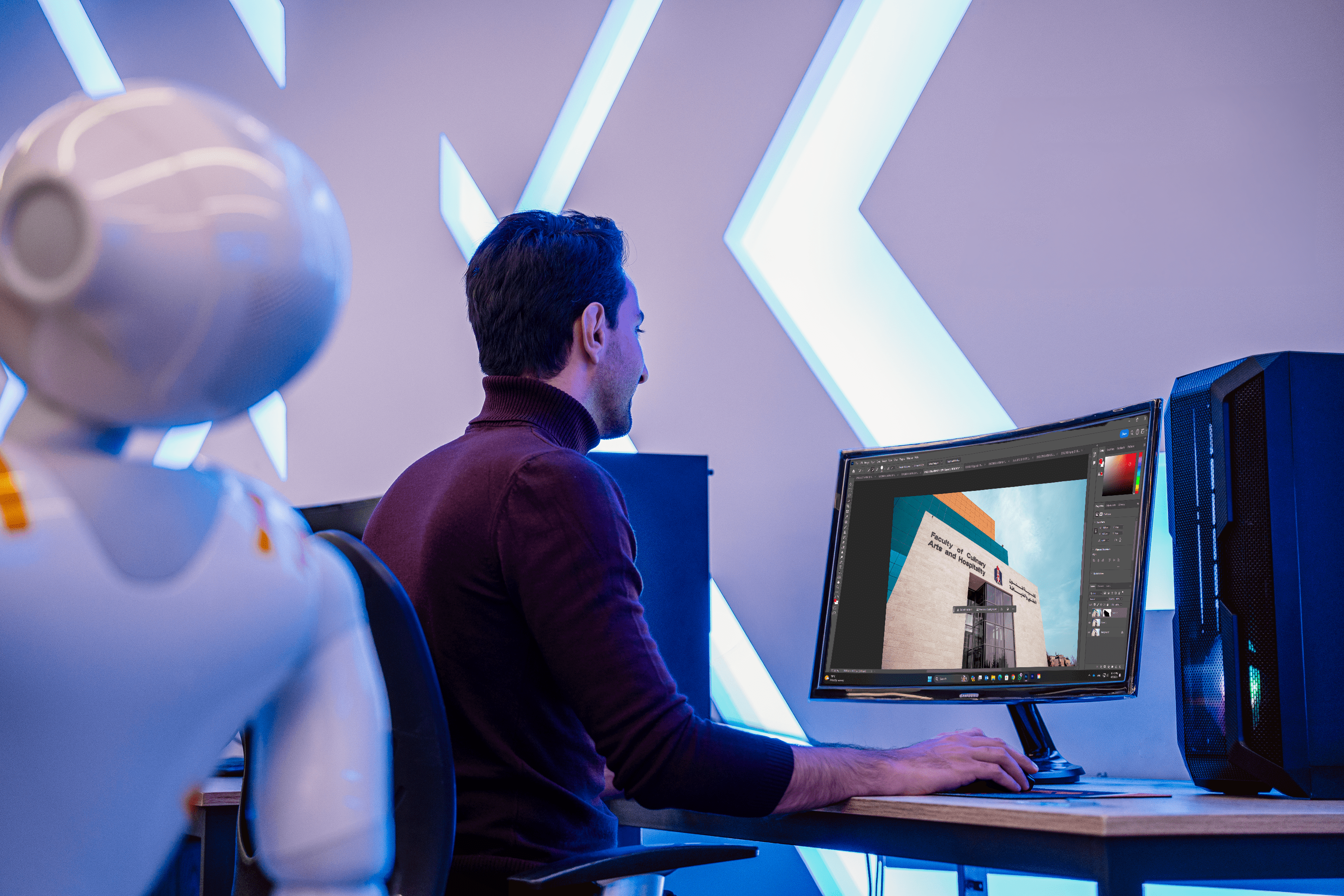
The Bachelor of Digital Game Design and Development program focuses on equipping students with advanced skills in game design, programming, testing, and project management. It emphasizes developing a deep understanding of player interaction with game systems and designing innovative, interactive experiences grounded in user research and testing. The program also addresses the social, ethical, and psychological dimensions of gaming, fostering critical thinking, enhancing communication skills, and promoting an awareness of the cultural context of digital games.
By combining theoretical education with practical application, the program enables students to create game environments, characters, and elements using cutting-edge industry tools and technologies, including 2D and 3D design and animation. Students engage in projects that simulate real-world work environments, participating in the development of comprehensive games that integrate artistic creativity with technical expertise from the planning phase to execution. This approach ensures that graduates are equipped with the knowledge and skills required to excel in the dynamic digital gaming industry, opening broad opportunities in technical, creative, and analytical fields to produce innovative and integrated digital games.
Digital Game Design and Development
Number Of Credit Hours
135

Faculty of Architecture and Design
Admission Requirements
Admission requirements of the Digital Game Design and Development program include a High School Certificate or equivalent in the following:
60%
- Scientific
- Scientific - Medical Field
- Scientific - Engineering Field
- Scientific - Pure Sciences Field
- Literary
- Comprehensive Health Education
- Informatics Administration
- Sharia
Job Opportunities

Study Plans and Program Files
Educational Objectives

Program Educational Objectives (PEOs)
PEO 1: Apply advanced knowledge and technologies in digital game development—including programming, game engines, and specialized software tools—to create innovative and functional design solutions.
PEO 2: Integrate principles of visual, spatial, kinetic, auditory, and temporal design to construct immersive interactive experiences aligned with academic and industry quality standards.
PEO 3 Conceptualize and implement cohesive narrative and interactive structures that accurately and effectively address user needs and project objectives.
PEO 4: Employ a user-centered design approach by analyzing user behavior and interaction preferences to enhance usability and elevate player satisfaction.
PEO 5: Collaborate within multidisciplinary teams to manage and execute game design and development projects, taking into account market dynamics and stakeholder requirements.
PEO 6: Utilize critical and analytical thinking methodologies to resolve complex design and technical challenges, generating innovative solutions grounded in best research and industry practices.
PEO 7: Uphold ethical, professional, and legal standards in the gaming industry, including respect for intellectual property rights, adherence to quality benchmarks, and commitment to social responsibility.
PEO 8: Engage in continuous professional development by monitoring emerging technological and aesthetic trends and participating in research initiatives and developmental programs to foster innovation in the field.
Learning Outcomes at Program Level (PLO's)
PLO 1: Critically analyze visual and aesthetic theories and concepts in digital games and interactive design within contemporary cultural and technological contexts.
PLO 2: Evaluate the historical evolution of game design and interactive media, deriving critical insights that inform contemporary practice across diverse social, cultural, and technological environments.
PLO 3: Demonstrate advanced proficiency in the use of game engines, programming languages, and specialized software tools to produce high-quality interactive digital content in accordance with professional technical standards.
PLO 4: Design and develop interactive gameplay experiences responsive to user needs, employing strategic thinking in the construction of narrative frameworks, visual interfaces, and interactive logic.
PLO 5: Generate innovative design solutions utilizing virtual and augmented reality technologies, as well as artificial intelligence, while upholding principles of sustainability and inclusive human-centered experience.
PLO 6: Collaborate effectively within multidisciplinary teams, assuming professional responsibility in managing game development projects and achieving shared objectives through the application of production and development management tools.
PLO 7: Present design concepts and projects through diverse visual and interactive media—verbally, in writing, and through prototypes—ensuring precision of content and alignment with the intended audience.
PLO 8: Assess the ethical, social, and legal dimensions associated with digital game design and development, exercising informed professional judgment that strengthens the field’s contribution to society and the environment.
PLO 9: Design and produce fully integrated interactive game environments that harmonize visual, auditory, and kinetic elements, grounded in established principles of design theory and user experience.
PLO 10: Construct coherent narrative and interactive frameworks, carefully organizing temporal sequences and interactive logic to deliver a compelling and cohesive gameplay experience.
National Qualifications Framework (NQFs)
Sustainable Development Goals (SDGs)