Contact Office On
Published Progress – SDG2
Public reporting on university progress and performance related to SDG2 (Zero Hunger).
Introduction
Al-Ahliyya Amman University (AAU) actively documents and publicly reports its contributions to SDG 2 – Zero Hunger, with a focus on food security, nutrition awareness, and sustainable-consumption practices. Through the Sustainability & International Ranking Center (SIRC), the University ensures that all SDG 2-related activities, statistics, and progress indicators are transparently published on its official website and within its annual Sustainability and Executive Sustainability Reports.
Across the 2023–2024 and 2024–2025 reporting cycles, AAU implemented several initiatives addressing food sustainability, including campus awareness campaigns on nutrition and waste reduction, support programs for low-income students, and community-based food-security initiatives. These efforts are documented in publicly accessible reports and news articles, ensuring accountability, evidence-based learning, and alignment with UN SDG 2 targets (2.1 & 2.4) and SDG 17 (Partnerships for the Goals).
Centers and Departments
02Faculty of Nursing
03Women’s Health Center
04Deanship of Student Affairs
05Marketing and Communications Unit
06Global Engagement Center
Activities
01AAU Sustainability Report 2023–2024
02Executive Sustainability Report (SDG 2 Section) 2024–2025
03AAU Launches Ramadan Charity Campaigns to Support the Local Community in Balqa Governorate
04AAU Concludes Its Ramadan Charity Campaigns in Support of the Local Community in Al-Balqa
05AAU and Arena Club Host Ramadan Iftar for Gaza Children and Their Families Undergoing Treatment in Jordan
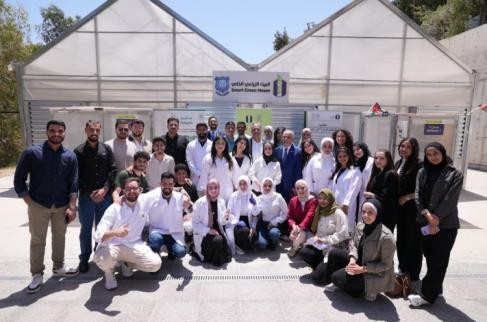
06Dr. Maher Al-Hourani Inaugurates the Smart Agricultural Greenhouse at AAU (Optional Cross-Evidence for SDG 2.4 – Sustainable Agriculture
07AAU Celebrates Arbor Day in Al-Balqa Governorate
Impact Evaluation & Development Plan
Performance Evaluation
- Transparent Public Reporting AAU’s Sustainability Reports and Executive Sustainability Reports for 2023–2024 and 2024–2025 feature verified sections detailing the University’s programs on food awareness, food-security support, and waste-reduction initiatives. Key documents include:
- AAU Sustainability Report 2023–2024 and 2024–2025
- Executive Sustainability Report SDG 2 Section 2024–2025
- These reports present quantitative and qualitative evidence of AAU’s SDG 2 performance and are made available online for public review, supporting transparency, stakeholder engagement, and THE Impact Ranking evidence requirements.
- Student Support and Social EquityThe Deanship of Student Affairs and the Finance Department maintain annual records of meal-support initiatives and food-security assistance benefiting students facing financial hardship. In parallel, AAU implements targeted social-support and charity campaigns that indirectly reduce food insecurity among vulnerable groups. Notable examples include:
- Ramadan Charity Campaigns in Al-Balqa Governorate: AAU launched and concluded a series of Ramadan campaigns providing food packages and basic necessities to low-income families, directly supporting local food security.
- Ramadan Iftar for Gaza Children and Their Families Undergoing Treatment in Jordan: In collaboration with the Arena Club and partners, AAU organized a collective Iftar for displaced children and their families, reinforcing social solidarity, dignity, and access to nutritious meals.
- Campus Nutrition Awareness and Sustainable Food PracticesThrough the Faculty of Nursing, the Women’s Health Center, and health- and nutrition-focused student clubs, AAU regularly conducts workshops and campaigns on healthy eating habits, balanced nutrition, and the prevention of diet-related diseases. In addition, AAU’s celebration of Arbor Day in Al-Balqa Governorate and the inauguration of the Smart Agricultural Greenhouse at AAU contribute to sustainable food and agriculture education, supporting SDG 2.4 on resilient and sustainable food-production systems.
- Data Verification and Public Access All SDG 2 indicators, including numbers of beneficiaries, participants in nutrition campaigns, training hours, outreach coverage, and sustainable-agriculture initiatives, are verified by SIRC and integrated into AAU’s SDG Evidence System. These data are then summarized and published through the University’s sustainability portal, ensuring that SDG 2 reporting is accurate, traceable, and aligned with international good practice.
Development Actions
- Action 1: Food Security and Nutrition Dashboard (2025–2028) Create an online, interactive dashboard reporting AAU’s food-security initiatives, nutrition workshops, student-beneficiary data, and community impact.
- Target: Dashboard operational by 2026, with biannual updates.
- Target: Annual “Zero Hunger Impact Report” released each May starting in 2025.
- Target: At least 100 community participants per year; impact tracked using SDG 2 indicators.
- Target: 25 % reduction in food waste by 2027; annual public audit of food-waste and sourcing performance.
- Target: One annual forum and at least two joint policy briefs or case-study reports published by 2028
Benchmarking & Best Practice
- Benchmarking Reference: AAU models its SDG 2 reporting and practice on leading institutions such as:
- University of California, Davis (USA)
- University of Reading (UK)
- University of Pretoria (South Africa)
- Open publication of quantitative food-security and nutrition data.
- Integration of food- and nutrition-related indicators into annual sustainability audits.
- Public communication of partnership projects, outreach campaigns, and impact metrics.
- Focusing on vulnerable families in Al-Balqa Governorate through Ramadan campaigns and community outreach.
- Supporting students facing financial hardship through indirect food-security measures and social-support programs.
- Using sustainable agriculture initiatives such as the Smart Agricultural Greenhouse and Arbor Day activities to strengthen local awareness of resilient food systems.