Contact Office On
Stakeholder Engagement Policy
Policy and procedures for identifying and engaging with external local stakeholders.
Introduction
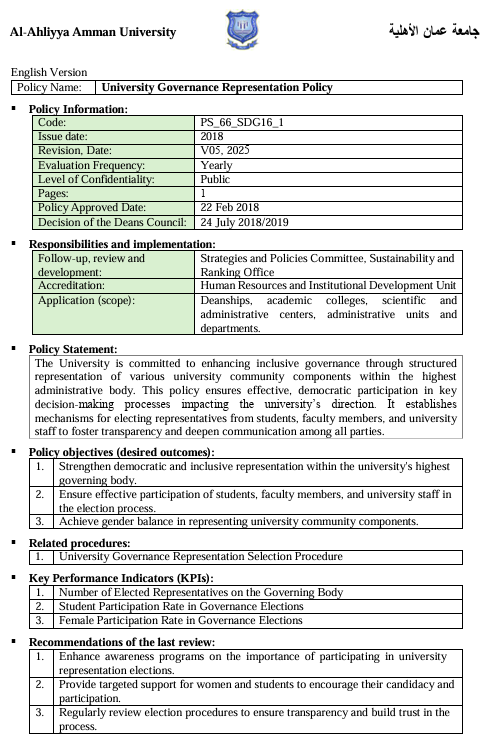
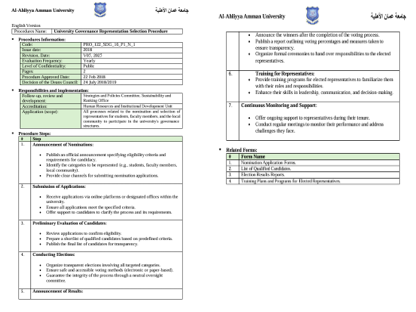
Al-Ahliyya Amman University (AAU) maintains a structured and transparent framework for engaging with local external stakeholders in alignment with SDG16.7, which emphasizes inclusive, participatory, and representative decision-making. This framework is governed by two official documents:
- Local Stakeholder Engagement Policy
- Local Stakeholders Identification and Engagement Procedure
These documents define how AAU identifies local stakeholders, evaluates engagement opportunities, and implements community-aligned activities. The framework ensures systematic engagement with government bodies, civil society organizations, NGOs, municipalities, professional associations, schools, health organizations, and private-sector partners.
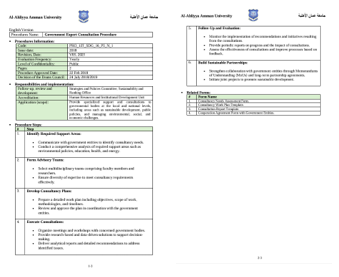
AAU’s stakeholder engagement approach is further supported by the Government Collaboration Policy and the Government Expert Consultation Procedure, enabling sustained collaboration with public institutions, participation in legal and policy dialogues, and integration of community needs in institutional activities.
Centers and Departments
02Global Engagement Center (GEC)
03Center for Innovation and Entrepreneurship (CIE)
04Women Health Center (WHC)
05Al-Ahliyya Center for Consultations and Psychological Care (CCPS)
06Medical Services Department
07Arena Complex – Community Hosting and Public Engagement
Activities
01Implementation of the Local Stakeholder Engagement Policy
02Application of the Identification & Engagement Procedure
03Government Collaboration Mechanisms
04Community Outreach through Specialized Centers
05Hosting Local Stakeholder Activities at the Arena Complex
Impact Evaluation & Development Plan
- Performance Evaluation AAU has a structured, transparent, and policy-based stakeholder engagement system. Engagement processes are governed by clearly documented policies and procedures. Multiple centers actively engage with stakeholders based on their specialization. Collaborations include schools, NGOs, municipalities, health entities, and government bodies. Activities demonstrate alignment with national priorities and SDG16 targets.
Development Actions
- Action 1: Establish a Digital Stakeholder Engagement Portal for data collection, partner registration, and activity documentation. Action 2: Publish an Annual Stakeholder Engagement Report summarizing partnerships, impact, and activity outcomes. Action 3: Expand engagement with local municipalities, NGOs, and civil-society groups. Action 4: Develop cross-sector engagement programs connecting innovation, health, sustainability, and community empowerment. Action 5: Create a Stakeholder Advisory Council to enhance participatory governance and guide community initiatives.
Benchmarking & Best Practice
- Global Best Practices Adopted:
- Stakeholder mapping aligned with international engagement frameworks.
- Multi-sectoral collaboration similar to global civic-engagement universities.
- Supports national strategies for youth empowerment, governance participation, and community development.
- Reinforces cooperation with ministries, municipalities, NGOs, and public institutions.
Institutional Integration Summary
Stakeholder engagement is fully institutionalized within AAU’s governance framework through a documented policy, a structured identification and engagement procedure, and the participation of key centers, including SIRC, GEC, CIE, WHC, CCPS, Medical Services, and the Arena Complex. These mechanisms ensure that local stakeholders are systematically identified, engaged, and integrated into AAU’s educational, developmental, and community-based activities, reinforcing AAU’s commitment to SDG16.