Contact Office On
Carbon Management
Process for managing carbon emissions and reducing overall CO₂ output.
Executive Summary
Al-Ahliyya Amman University (AAU) has adopted a comprehensive, policy-driven carbon-management framework designed to gradually eliminate institutional CO₂ emissions and promote long-term climate responsibility. The University’s carbon-management approach is based on structured policies, clear operational procedures, and continuous monitoring practices that ensure all campus activities from energy use to transportation and building operations align with its sustainability vision and national clean-energy commitments.
Through the integration of renewable-energy systems, energy-efficient buildings, sustainable mobility solutions, and advanced monitoring tools, AAU maintains a proactive strategy that reduces emissions at the source, enhances institutional resilience, and supports SDG7 and SDG13 objectives. This process is fully supported by the Carbon Management and Emissions Reduction Policy and the Carbon Emissions Management Procedure, which provide detailed guidance for measurement, reporting, mitigation, and continuous improvement.
Centers and Departments
02Engineering and Maintenance Department
03Transportation and Logistics Unit
04Center for Innovation and Entrepreneurship (CIE)
05Hourani Center for Applied Scientific Research (HCASR)
Activities
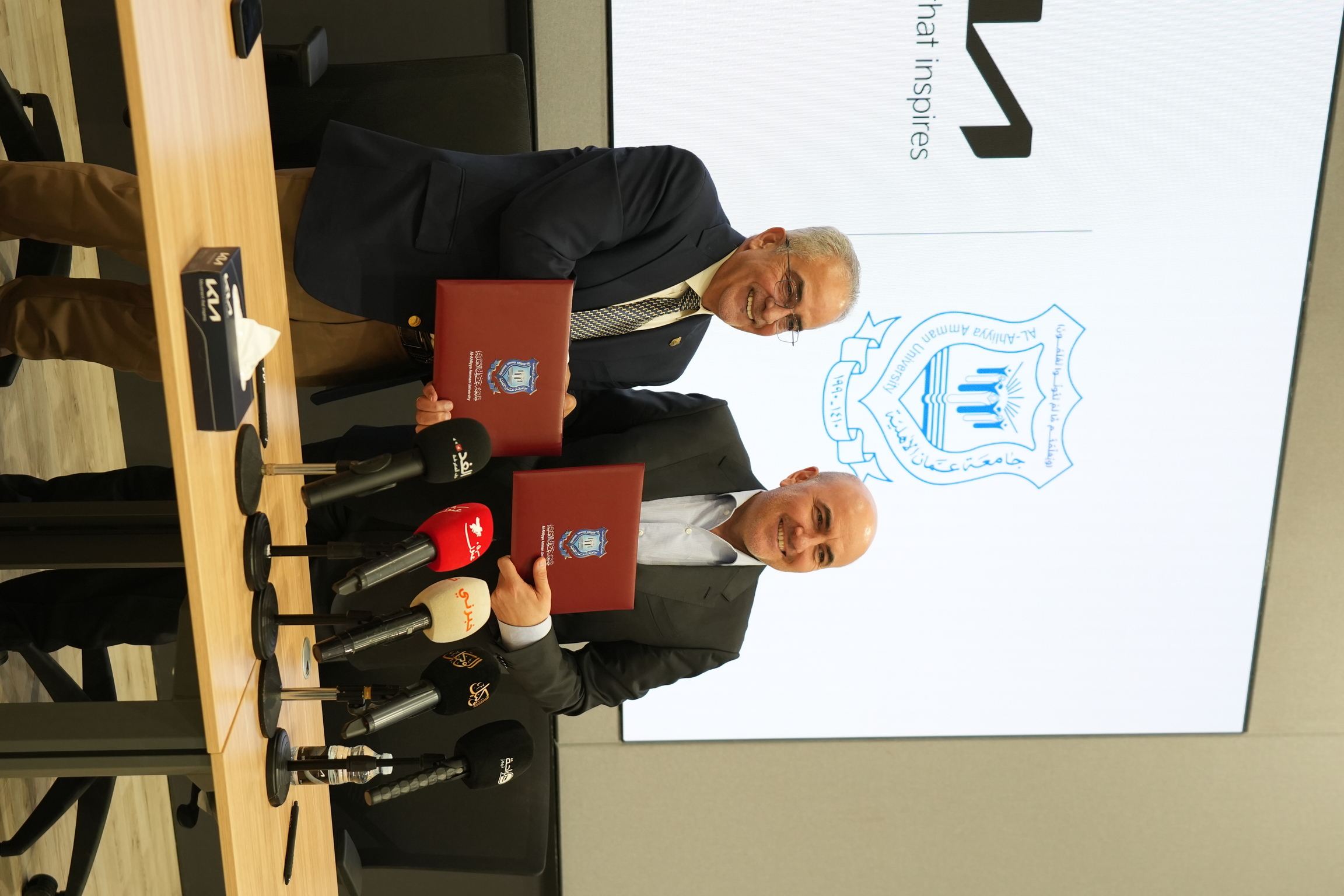
01AAU Electric-Vehicle Partnership with KIA Jordan
02Campus Tree-Planting and Green-Landscape Initiatives
03Smart-Building Implementation Program
04Using Artificial Intelligence Tools to Enter the Job Market” – Training Workshop
05Carpooling and Sustainable Commuting Program
Impact Evaluation & Development Plan
Performance Evaluation
- Carbon-management policies and procedures are fully documented, publicly accessible, and operational across all university units.
- Emission-reduction actions are integrated into energy systems, building operations, mobility planning, and campus-wide sustainability practices.
- Renewable-energy integration significantly minimizes emissions at the source.
- Smart-building upgrades enhance ventilation, lighting efficiency, temperature control, and automated energy performance.
- Sustainable mobility initiatives reduce transportation-related emissions.
- Continuous monitoring ensures compliance with environmental standards and supports long-term decarbonization efforts.
Development Actions
- Action 1: Digitize the full carbon-monitoring and reporting process, integrating smart meters and automated dashboards. Action 2: Publish an Annual Carbon-Management Report summarizing mitigation actions, operational improvements, and institutional impact. Action 3: Deliver training workshops on carbon-accounting, climate-leadership skills, low-carbon technologies, and sustainability integration. Action 4: Develop a digital communication platform enabling students and staff to propose carbon-reduction ideas and monitor progress. Action 5: Introduce formal indicators to track building performance, transportation trends, renewable-energy usage, and behavioral change across the campus community.
Benchmarking & Best Practice
- Adopted Global Best Practices
- Alignment with internationally recognized carbon-management models and sustainable-campus frameworks.
- Use of climate-resilient building principles and smart-energy technologies inspired by global best practices in decarbonization.
- Compliance with national environmental regulations and clean-energy strategies.
- Reflection of local climate conditions, regulatory frameworks, and Jordan’s national sustainability agenda.