077.2.2

Building Upgrades

Plans to upgrade existing campus buildings to higher energy-efficiency levels.

Executive Summary

Al-Ahliyya Amman University (AAU) is committed to upgrading all campus buildings to advanced energy-efficiency standards in line with SDG7 Affordable and Clean Energy. The University's upgrade plan integrates modern sustainability principles across construction, renovation, and facility-management processes. These upgrades focus on enhancing insulation quality, improving indoor air comfort, optimizing natural daylight use, upgrading HVAC systems to more efficient models, expanding smart-building automation, and preparing all facilities for seamless renewable-energy integration.

The upgrades are guided by AAU’s official Energy-Efficient Buildings Policy and related procedures, ensuring that all new developments and renovations are designed to minimize energy consumption, enhance building performance, and advance the University’s long-term sustainability vision.

Centers and Departments

01Sustainability and International Ranking Center (SIRC)

Oversees the planning, monitoring, and institutional integration of building-efficiency upgrades, ensuring alignment with clean-energy policies and international sustainability frameworks.

02Engineering and Maintenance Department

Leads technical implementation of building upgrades, including HVAC modernization, insulation improvements, lighting enhancements, and smart-system installations across campus facilities.

03Computer Center

Supports the deployment of automation technologies, energy-monitoring systems, digital dashboards, and IoT-based sensors essential for smart-building functionality.

04Hourani Center for Applied Scientific Research (HCASR)

Provides applied research, testing, and technical assessments that support the planning and evaluation of energy-efficient building upgrades.

05Faculty of Architecture and Design

This faculty integrates green-building design, daylighting optimization, passive cooling strategies, and sustainable construction techniques into teaching and research. It leads field visits to certified green buildings and supports the implementation of energy-efficient design standards.

Activities

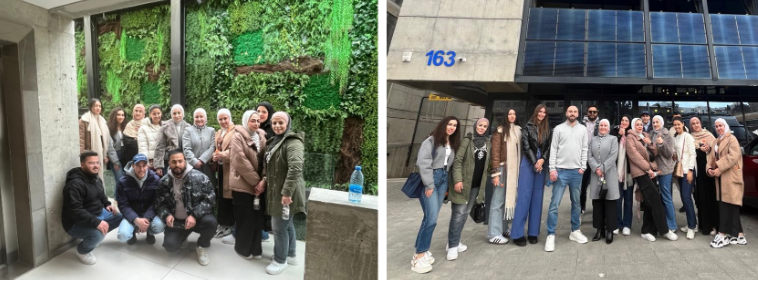
01Scientific Visit to the Green-Certified Ezzat Marji Building

AAU students engaged in a hands-on exploration of a green-certified building to learn about advanced sustainable design techniques, efficient HVAC systems, and environmentally responsible construction methods that support AAU’s upgrade plans.

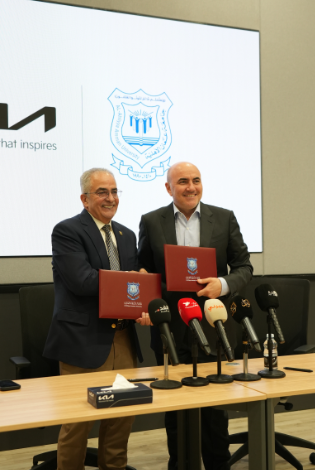
02MoU with KIA Jordan – Clean Mobility & Sustainable Infrastructure

The partnership promotes clean-energy infrastructure development, including EV-ready facilities that integrate smoothly into future smart-building upgrades.

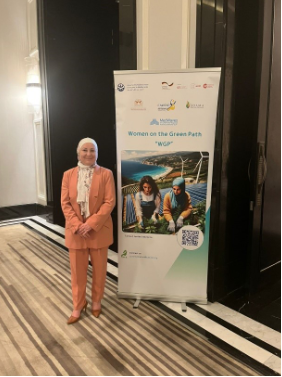
03Participation in “Women on the Green Path” Workshop

AAU contributed to a national workshop emphasizing sustainable design, green-building approaches, and environmentally conscious development, key principles embedded in campus upgrade plans.

04Smart Building Implementation Program

AAU documented a campus-wide initiative to integrate building automation, energy-efficient lighting, improved ventilation, and smart-control systems as part of its continuous upgrade strategy.

05Campus-wide LED Lighting Upgrade Initiative

The University replaced traditional lighting with efficient LED fixtures and connected them to automated lighting control systems, advancing the energy efficiency transformation of all campus buildings.

Impact Evaluation & Development Plan

Performance Evaluation

  • Building upgrade processes at AAU are formally documented through approved building-efficiency policies and renovation procedures that ensure all improvements follow sustainable design principles.
  • The University maintains a transparent framework for building development through publicly accessible policies, sustainability guidelines, and energy-efficiency standards.
  • Upgrade mechanisms involve collaboration between engineers, architects, sustainability specialists, and administrative units to ensure that all perspectives are considered in campus improvement plans.
  • Regular coordination meetings between the Engineering Department, Faculty of Architecture & Design, and the Sustainability Center ensure that academic knowledge informs operational decision-making.
  • All building upgrades align with national construction codes, environmental regulations, and energy-efficiency expectations set by higher-education authorities.

Development Actions

  1. Action 1: Digitize the review and approval process for all renovation and upgrade requests to ensure transparency, traceability, and efficient workflow. Action 2: Publish an annual Energy-Efficient Building Upgrade Report summarizing improvements, implemented technologies, and sustainability achievements. Action 3: Provide specialized training workshops on sustainable architecture, green construction practices, and energy-efficient renovation methods for engineers, architects, and facility staff. Action 4: Develop a dedicated communication platform where faculty, students, and staff can propose upgrade ideas and submit feedback on building performance. Action 5: Introduce performance indicators to evaluate the effectiveness of building upgrades, focusing on indoor comfort, lighting quality, ventilation, and long-term operational efficiency.

    Benchmarking & Best Practice

  2. Adopted Global Best Practices:
    • Alignment with international sustainable-building guidelines such as LEED, ASHRAE, and UNEP frameworks for resource-efficient buildings.
    • Adoption of global smart-building concepts including automation, natural lighting optimization, and environmentally responsive design.
    Localization to Jordan’s Context:
    • Compliance with national building and energy regulations issued by the Ministry of Public Works and Housing.
    • Integration of local environmental considerations, climate conditions, and national clean-energy strategies into building-upgrade plans.
    Future Goal (By 2028): AAU aims to establish a fully modernized campus where all buildings operate under a unified energy-efficiency framework supported by smart technologies and sustainable renovation practices. Institutional Integration Summary Energy-efficient building upgrades are fully embedded in AAU’s institutional policies, procedures, and campus-planning framework. Through structured renovation plans, policy-guided decision-making, and participation from engineering, architecture, sustainability, and administrative units, AAU ensures that all facilities evolve in alignment with sustainable development standards. The University’s continuous improvement approach strengthens its commitment to SDG7 by promoting environmentally responsive infrastructure, advanced building technologies, and long-term energy-efficient development.
View the 2026 edition of this pageRES.AM_ V.01_29 Oct 2026

Contact Office On

  • Email: sdo@ammanu.edu.jo
  • Phone: +962 5 3500211
  • Extension: 2060
  • Address: Al-Ahliyya Amman University / Amman-Jordan- Al Salt Road / Zip-Code (Postal Address): (19328)
  • Fax: +962 6 5336104

Al-Ahliyya Amman University

Email: Public@ammanu.edu.jo


© Copyright Al-Ahliyya Amman University. Amman, Jordan 19111.