Contact Office On
Water Reuse Policy
Institutional policy to maximize water reuse across campus operations and facilities.
Executive Summary
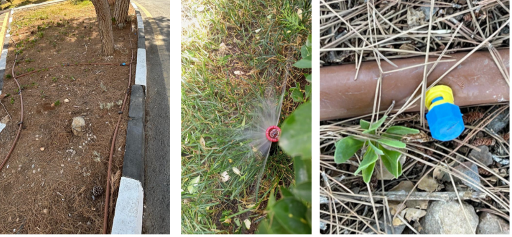
Al-Ahliyya Amman University (AAU) adopts a comprehensive Water Reuse Policy aimed at maximizing the recycling and safe reuse of water throughout all campus facilities. The university’s integrated system covers collection, treatment, storage, and distribution of treated wastewater and harvested rainwater, which are reused for irrigation, cleaning, and cooling systems.
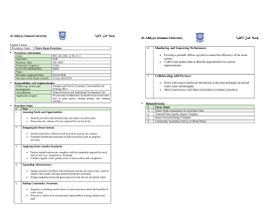
This policy is governed by the following official documents that form the backbone of AAU’s circular-water framework:
Together, they ensure a closed-loop system that reduces freshwater dependency, optimizes resource efficiency, and aligns with SDG 6.3 (Improve Water Quality and Reuse) and SDG 6.4 (Water-Use Efficiency), while contributing indirectly to SDG 12 (Responsible Consumption) and SDG 13 (Climate Action).
Centers and Departments
02Facilities and General Supplies Department – System Operation and Maintenance
03Hourani Center for Applied Scientific Research – Research and Innovation Support
04Pharmacological and Diagnostic Research Center (PDRC) – Laboratory Verification and Testing
05Finance Department – Sustainability Investment and Budgeting
Activities
01Implementation of the Water Reuse Procedure
02Expansion of Treated Water Irrigation Network
03Rainwater Harvesting and Storage Integration
04Research and Pilot Projects on Water Recycling
05Awareness and Training Program – “Reuse for Sustainability”
Impact Evaluation & Development Plan
Performance Evaluation
- Reuse coverage: 100% of irrigated areas supplied by treated or harvested water.
- Reuse volume: ≈ 20% of total campus consumption.
- Efficiency trend: ↑ by 25% since 2022 through infrastructure expansion.
- Water quality compliance: 100% meets national standards based on PDRC testing.
- Operational reliability: 98% system uptime for treatment and reuse networks.
Development Actions
- Action 1: Upgrade existing treatment tanks to increase reuse capacity by 50%. Action 2: Integrate AI-based monitoring for real-time quality and flow tracking. Action 3: Expand rainwater harvesting systems to cover all building rooftops. Action 4: Publish annual “Water Reuse and Efficiency Performance Report. Action 5: Establish student projects on innovative reuse applications (such as green roofs and hydro-gardens).
Benchmarking & Best Practice
- Adopted Practice: Aligned with Jordanian Ministry of Water and Irrigation Reuse Regulations, FAO Water Reuse Guidelines, and ISO 14046 Water Footprint Standard. Local Adaptation: AAU customizes these frameworks to Jordan’s semi-arid context through closed-loop reuse systems and treated-water irrigation networks tailored to campus topography. Future Benchmark Goal (by 2028):
- Achieve 50% total water reuse ratio across campus operations.
- Maintain zero untreated discharge.
- Obtain third-party reuse certification for quality compliance.