1717.2.3

International SDG Data Collaboration

Collaboration on gathering or measuring data for SDG progress and indicators at the international level.

Executive Summary

Al-Ahliyya Amman University (AAU) adopts a data-driven and globally oriented approach to measuring Sustainable Development Goal (SDG) progress through active collaboration with international partners. Guided by SDG 17.18, which emphasizes data capacity, quality, and comparability, AAU works closely with universities, NGOs, research networks, and international bodies to co-design indicators, harmonize datasets, and strengthen methodological rigor.

Through the Sustainability & International Ranking Center and the Global Engagement Center, the university contributes structured datasets, metadata, and methodology notes to global sustainability networks, regional consortia, and multi-country SDG research initiatives. These collaborations advance transparent evidence production across thematic priorities such as quality education (SDG 4), digital health and public health (SDG 3), innovation and sustainable industry (SDG 9), clean energy and climate action (SDG 7 & 13), and reduced inequalities (SDG 10).

AAU’s international SDG data partnerships adhere to FAIR data principles (Findable, Accessible, Interoperable, Reusable) and follow SDMX-style documentation to ensure all outputs are verifiable, comparable, and reusable by international stakeholders, positioning the university as a regional contributor to global SDG evidence systems.

Centers and Departments

01Sustainability and International Ranking Center

Leads the university’s sustainability data governance, SDG evidence collection, and official reporting to global frameworks such as UI GreenMetric, THE Impact Ranking, and QS Sustainability. Coordinates international data submissions, validates SDG indicators, ensures metadata compliance with UN SDG 17.18, and manages AAU’s internal SDG Evidence Repository.

02Global Engagement Center

Oversees international partnerships, research cooperation, and academic diplomacy Facilitates cross-border data-collection projects, manages joint data-sharing agreements (MoUs), and supports global benchmarking of SDG indicators.

03Hourani Center for Applied Scientific Research

Conducts interdisciplinary applied research and manages laboratory-based data systems. Generates and standardizes scientific and technical datasets (energy, water, climate, health) used in regional SDG analytics and open-data repositories.

04Teaching and Learning Center

Provides professional development and training in educational technologies and assessment systems Supports the design of digital data-collection tools for SDG 4 (education indicators) and ensures data quality for regional learning-outcome studies.

05Hourani e-Learning Center

Oversees online learning management and digital data infrastructure. Manages secure digital platforms for dataset exchange and hosts international SDG data dashboards and monitoring tools.

06Pharmacological and Diagnostic Research Center

Conducts biomedical and pharmaceutical research. Contributes validated health-related datasets (SDG 3 indicators) for inclusion in joint international databases, improving comparability of health metrics.

07Computer Center

Manages AAU’s ICT infrastructure and data-security systems. Provides technical support for data integrity, cloud sharing, and cybersecurity of international SDG datasets.

Activities

01First World Public Assembly in Moscow – Cross-Border Dialogue on SDG Metrics and Evidence

Al-Ahliyya Amman University (AAU) participated in the First World Public Assembly in Moscow, joining representatives from governments, NGOs, and universities to discuss sustainability data, SDG indicator harmonization, and evidence-based policy frameworks. AAU contributed to working sessions on SDG measurement and reporting transparency, strengthening international comparability of sustainability datasets in line with SDG 17.18 (Data Capacity & Quality).

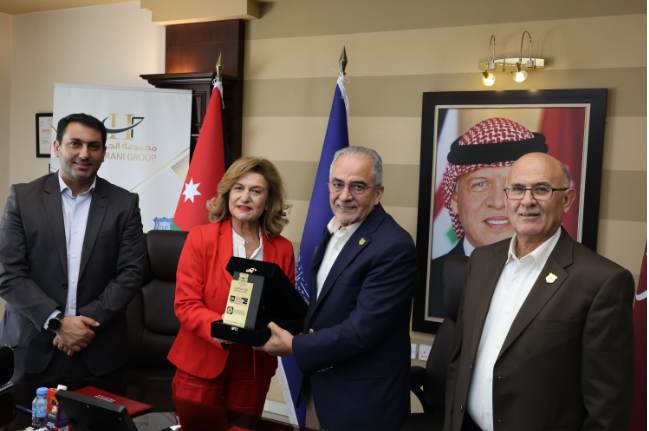
02Memorandum of Understanding with Al-Hussein Society for Training and Inclusion – Inclusive Data and SDG 10 Disaggregation

AAU signed a strategic MoU with Al-Hussein Society, a leading NGO supporting persons with disabilities, to co-develop inclusive data frameworks for higher education. The partnership focuses on collecting and disaggregating data on access, equity, and learning outcomes to support SDG 4 (Quality Education), SDG 10 (Reduced Inequalities), and SDG 17.18 (Data Capacity Building).

03Memorandum of Understanding with Al-Hussein Society for Training and Inclusion – Inclusive Data and SDG 10 Disaggregation

AAU partnered with the Global Academy for Digital Health and AI to develop data-collection methodologies and indicators for digital health and medical innovation. The collaboration includes exchanging anonymized research datasets, harmonizing metadata, and aligning measurement protocols with international standards, supporting SDG 3 (Good Health and Well-Being), SDG 9 (Industry and Innovation), and SDG 17 (Partnerships for the Goals).

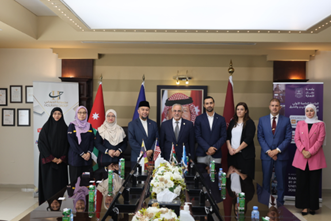
04International Agreement with MARA University of Technology (UiTM) – Joint Research Datasets and SDG Indicators

AAU signed an international collaboration agreement with MARA University of Technology (Malaysia) to co-collect and analyze datasets for education and innovation indicators. This partnership promotes cross-border data comparability, joint research repositories, and shared SDG dashboards, contributing directly to SDG 4, SDG 9, and SDG 17.18 (Enhancing Data Quality and Availability).

05Arab Global Investors Forum – Evidence Exchange for Research and Innovation Metrics

AAU participated in the Arab Global Investors Forum, engaging with governmental, academic, and private-sector organizations to share research-impact data and innovation metrics. The event fostered collaboration on SDG-related economic indicators and regional evidence frameworks that track innovation capacity, supporting SDG 9 (Industry and Innovation) and SDG 17 (Partnerships for the Goals).

Impact Evaluation & Development Plan

A

Performance Evaluation

AAU demonstrates strong and credible performance in international SDG data collaboration by contributing standardized datasets, participating in global evidence-sharing platforms, and engaging in cross-border research projects. Between 2023 and 2025, the university delivered quality-assured data submissions to international sustainability frameworks, partnered with global institutions on SDG indicator research, and expanded its role in data-driven decision-support mechanisms.

Key performance components include:
  1. Structured SDG Data Submissions

AAU provides annual sustainability datasets – with accompanying evidence, methodologies, and KPIs – to international bodies and ranking systems. Each dataset undergoes strict internal quality assurance, ensuring transparency, traceability, and compliance with international standards.

  1. Multi-Country Research Data

Through institutional agreements, AAU collaborates with global universities and NGOs on joint datasets involving surveys, monitoring studies, bibliometric indicators, innovation metrics, digital health evidence, and educational technology (EdTech) analytics.

  1. Governance & Traceability

The Sustainability & International Ranking Center maintains standardized data dictionaries, verification trails, SDG evidence registries, and documentation protocols to support reproducible analytics and auditable indicator pathways.

  1. Capacity Building

AAU staff and partner institutions regularly exchange methodologies for baseline setting, metadata definition, data disaggregation, and QA/QC procedures aligned with UN SDG guidelines.

B

Development Actions

A roadmap designed to elevate AAU to a regional leader in SDG data governance:
  • Action 1: Establish the AAU International SDG Data Lab (2025–2028)

A dedicated laboratory coordinating multi-country SDG data projects, producing at least three open datasets annually with standardized metadata.

  • Action 2: SDMX-Lite Harmonization Framework

Implement unified Data Management Plans (DMPs) and SDMX-compliant metadata structures aligned with UN SDG indicator standards.

  • Action 3: Launch the AAU Open SDG Evidence Portal

A multilingual open-data portal publishing datasets, methodological notes, codebooks, and QA/QC documentation for use by international researchers and policymakers.

  • Action 4: Joint SDG Measurement Pilots

Conduct cross-country measurement pilots in digital education, public health innovation, and renewable energy to produce annual international dashboards and comparative indicator reports.

  • Action 5: Annual “SDG Indicators Clinic”

A regional training program preparing more than 100 participants per year in indicator validation, disaggregation, and reproducible data analytics.

C

Benchmarking & Best Practice

Benchmarking Reference:

AAU benchmarks its practices against globally recognized leaders in SDG data governance, including:

  • University College London (UK)
  • National University of Singapore (NUS)
  • University of Melbourne (Australia)

These institutions serve as role models for transparent reporting, verified evidence, and internationally comparable SDG methodologies.

Adopted Practices AAU adopts:
  • FAIR data standards
  • SDMX-style metadata documentation
  • Peer-reviewed indicator methods
  • Standardized DMPs and evidence registries
  • Verification trails and reproducible workflows
Localization AAU adapts global best practices to the Jordanian context by emphasizing:
  • Gender, disability, refugee status, and geographic disaggregation
  • National policy priorities (climate adaptation, digital inclusion, health innovation)
  • Alignment with Jordan’s national SDG Data Strategy (2023–2030)

Continuous Improvement

AAU participates in international SDG-data webinars, benchmarking surveys, and indicator-methodology exchanges, informing ongoing updates to the AAU SDG Data Quality Manual.

Future Benchmark Goal (2028):

Establish AAU Center for SDG Data Governance & Analytics as a regional hub for SDG data harmonization, open-data dissemination, and capacity building across Arab universities and government partners.

View the 2026 edition of this pageRES.AM_ V.01_29 Oct 2026

Contact Office On

  • Email: sdo@ammanu.edu.jo
  • Phone: +962 5 3500211
  • Extension: 2060
  • Address: Al-Ahliyya Amman University / Amman-Jordan- Al Salt Road / Zip-Code (Postal Address): (19328)
  • Fax: +962 6 5336104

Al-Ahliyya Amman University

Email: Public@ammanu.edu.jo


© Copyright Al-Ahliyya Amman University. Amman, Jordan 19111.