1616.3.3

Policy Research Collaboration

Policy-focused research collaborations with government departments.

Executive Summary

Al-Ahliyya Amman University (AAU) plays a leading national role in advancing governance, anti-corruption, digital legislation, human-rights policy, and judicial reform through structured, verifiable collaboration with government departments and national public institutions. These collaborations are guided by:

  • Government Collaboration Policy
  • Government Expert Consultation Procedure
  • Academic Freedom Support Policy
  • Local Stakeholder Engagement Policy

Together, these frameworks ensure that AAU’s policy research engagement is ethical, systematic, transparent, and aligned with SDG 16 objectives related to justice, accountability, and strong institutions.

Centers and Departments

01Faculty of Law

The Faculty of Law is the primary unit conducting policy-focused research for government partners, specializing in legal reform, anti-corruption frameworks, human rights, data protection, and judicial development.

02Hourani Center for Applied Scientific Research (HCASR)

HCASR supports applied policy research through evidence-based studies in areas such as public health regulation, digital transformation, and scientific policymaking, providing critical analysis for government stakeholders.

03Sustainability & International Ranking Center (SIRC)

SIRC documents and coordinates research partnerships related to SDG16 and ensures alignment with national policy needs, facilitating structured collaboration with governmental institutions.

04Global Engagement Center (GEC)

GEC supports cross-institutional research collaboration with ministries, commissions, and regulatory authorities and connects faculty experts with national and international policy bodies.

Activities

01Policy Research Submitted to the Integrity & Anti-Corruption Commission (JIACC)

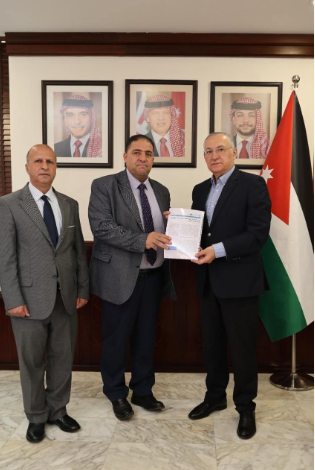
AAU submitted an official research study titled: “Criminalizing Corruption in the Private Sector: An Analytical Study in Jordanian Legislation.” Authored by Prof. Khaled Al-Hurayyizat, delivered by Dean Dr. Osayd Dhunibat, and received by JIACC Chairman Dr. Muhannad Hijazi, the study provides:
  • legal models for criminalizing private-sector corruption,
  • analysis of legislative gaps in Jordanian and Arab legislation,
  • recommendations aligned with international anti-corruption conventions.
The research was published by the Rule of Law and Anti-Corruption Center (ROLACC), Qatar.

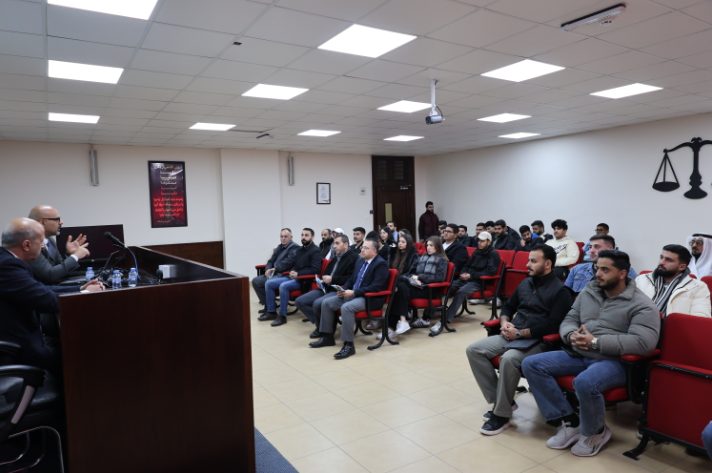
02Policy Dialogue with the Minister of State for Legal Affairs

AAU hosted H.E. Dr. Fayez Al-Qudah, Minister of State for Legal Affairs, under the patronage of a major legal seminar titled: “The Role of the Judiciary in Arbitration Proceedings.” Discussions covered:
  • amendments to the Jordanian Arbitration Law (2018),
  • judicial oversight in arbitral decisions,
  • national and international arbitration reforms,
legislative developments in judicial–arbitration interaction

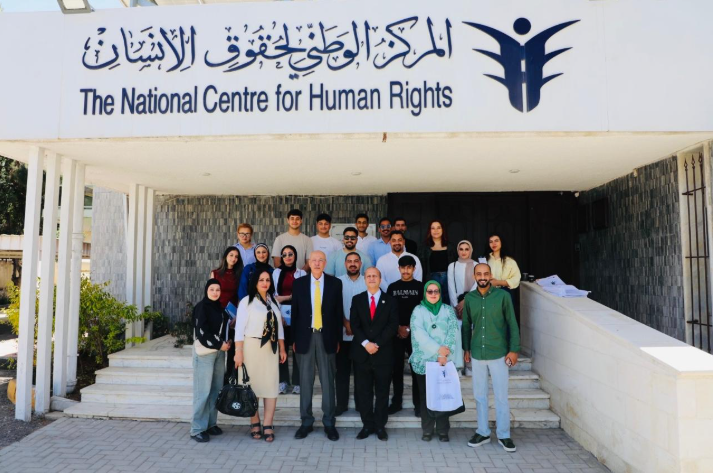
03Human Rights Policy Collaboration with the National Center for Human Rights (NCHR)

A delegation from AAU engaged with the Commissioner General for Human Rights, receiving briefings on:
  • national human-rights monitoring policies,
  • complaint-handling mechanisms,
  • international reporting obligations,
  • legislative and institutional challenges.
Students participated in policy discussions on justice, human dignity, and rights protection.

04Seminar on the Personal Data Protection Law (Ministry of Digital Economy and Entrepreneurship)

AAU hosted Eng. Tawfiq Abu Bakr, Director of the Personal Data Protection Directorate, who discussed:
  • legislative drafting stages,
  • data-governance enforcement mechanisms,
  • criminalized behaviors under the new law,
  • digital-rights protection frameworks.
This seminar supports digital-governance and legislative-policy research.

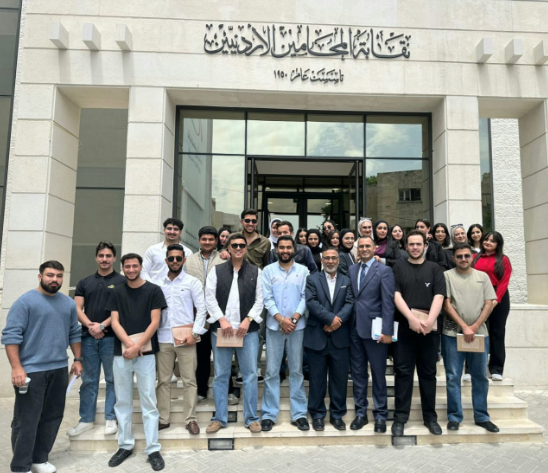
05Legal Practice Research Collaboration with the Jordanian Bar Association

The university engages in research discussions and policy analysis with the Bar Association to support modernization of legal practice and procedural reform.

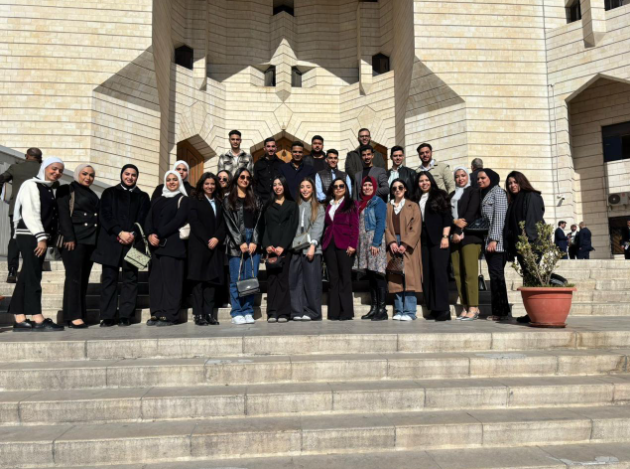
06Judicial Policy Exposure at the Palace of Justice

Students observed:
  • civil-lawsuit registration procedures,
  • digital litigation systems,
  • conciliation courts,
  • first instance courts,
  • economic, commercial, and mediation chambers.
This provides direct insight into judicial-policy implementation and litigation governance.

07Legal Practice Policy Engagement with the Jordanian Bar Association

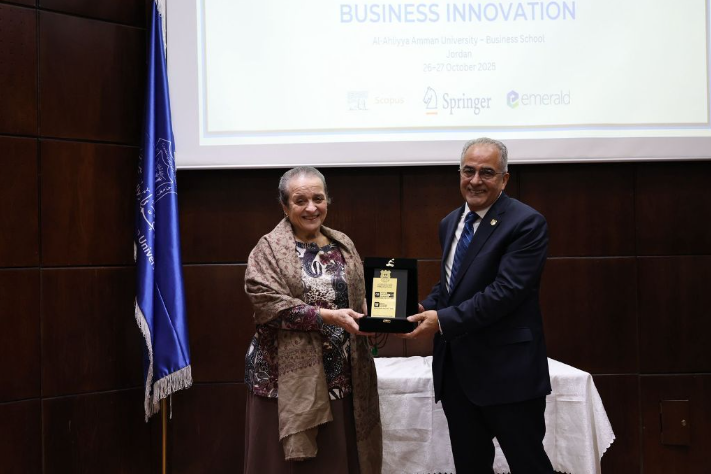
Al-Ahliyya Amman University (AAU) hosted the International Conference on Digital Transformation, FinTech, and Business Innovation (ICDFB 2025) under the patronage of Her Royal Highness Princess Alia bint Al Hussein. The event brought together a distinguished group of experts, academics, researchers, and representatives from national academic, economic, and technological institutions. The conference served as a scholarly platform for discussing contemporary developments in digital transformation, financial technology, institutional innovation, and the knowledge economy, with broad participation from Arab and international researchers who presented academic papers and shared global experiences. In his opening remarks, the Dean of the Faculty of Business, Prof. Sultan Al-Masaeed, emphasized that the event aligns with AAU’s mission to foster an academic climate that encourages creativity, research, and digital entrepreneurship. The conference included extensive sessions and discussions aimed at promoting collaboration between universities, research centers, practitioners, and decision-makers. It facilitated knowledge exchange and dialogue on digital governance, technological innovation, and future opportunities for institutional cooperation, reinforcing AAU’s position as a regional leader in innovation and scientific research.
Impact Evaluation & Development Plan

A

Performance Evaluation

1. Institutional Transparency and Governance

AAU ensures policy transparency through public access to:
  • governance frameworks, policies, and compliance procedures; • the University Governance Representation Policy, Transparency and Anti-Corruption Policy, Local Stakeholder Engagement Policy; • verified and published governance documentation via the AAU Sustainability Portal.
  1. Ethics, Anti-Corruption, and Compliance Mechanisms
AAU supports ethical governance through:
  • Anti-Corruption and Organized Crime Compliance Review Procedure, • Academic Freedom Compliance Review Procedure, • Government Expert Consultation Procedure.

These ensure accountability and compliance with national governance standards.

  1. Human Rights, Justice, and Civic Education
AAU advances justice and civic responsibility through:
  • seminars and awareness events, • human-rights policy discussions, • academic modules on legal ethics, civic literacy, and governance.
  1. Youth and Political Participation

Through the Deanship of Student Affairs and national policy events, AAU strengthens youth roles in:

  • public dialogue, • legal-policy discussions, • governance awareness.
  1. Public Accessibility of Policies and Reports
All SDG16 materials are:
  • verified by SIRC, • approved by the University Presidency, • published publicly through sustainability portals and reports.
B

Development Actions

  • Action 1: Governance Transparency Dashboard – Launch 2026
  • Action 2: Youth & Civic Engagement Program – 500+ participants annually
  • Action 3: Anti-Corruption & Ethics Awareness Campaign – two sessions per semester
  • Action 4: SDG16 Research Cluster – 10+ peer-reviewed papers annually
  • Action 5: Annual Institutional Integrity Report – starting 2025
C

Benchmarking & Best Practice

AAU benchmarks against:
  • University College London • University of Melbourne • American University of Beirut • University of Cape Town
Best practices adopted include:
  • open governance publication; • civic-engagement integration; • policy transparency mechanisms; • linking research to national policy impact.
Localization to Jordanian Context: AAU aligns with:
  • Jordan’s National Integrity and Anti-Corruption Strategy • Ministry of Digital Economy governance frameworks • National Human Rights Agenda • National Youth Empowerment Programme

Institutional Integration Summary

Policy research collaboration at AAU is led by:
  • SIRC • Faculty of Law • Global Engagement Center • Hourani Center for Applied Scientific Research • Legal Affairs Department

ensuring that AAU’s contributions to justice, governance, and public-policy development are measurable, verifiable, transparent, and aligned with SDG16 and SDG17.

View the 2026 edition of this pageRES.AM_ V.01_29 Oct 2026

Contact Office On

  • Email: sdo@ammanu.edu.jo
  • Phone: +962 5 3500211
  • Extension: 2060
  • Address: Al-Ahliyya Amman University / Amman-Jordan- Al Salt Road / Zip-Code (Postal Address): (19328)

  • Fax: +962 6 5336104

Al-Ahliyya Amman University

Email: Public@ammanu.edu.jo


© Copyright Al-Ahliyya Amman University. Amman, Jordan 19111.