1616.2.5

Anti-Corruption Commitment

Publication of the university’s principles and commitments against organized crime, corruption, and bribery.

Executive Summary

Al-Ahliyya Amman University (AAU) publicly affirms a zero-tolerance stance toward corruption, bribery, and organized crime and integrates this stance into its governance framework, policies, and academic culture.

Through the Transparency and Anti-Corruption Policy and the Anti-Corruption and Organized Crime Compliance Review Procedure, AAU clearly sets out its principles, values, and commitments to integrity, ethical conduct, and lawful behavior across all academic, administrative, financial, and contractual activities.

These commitments are published, accessible, and verifiable, aligning the university with SDG 16.5 (substantially reduce corruption and bribery) and SDG 16.6 (effective, accountable, and transparent institutions).

Centers and Departments

01Sustainability and International Ranking Center (SIRC)

SIRC supervises SDG16 implementation, monitors compliance with anti-corruption procedures, documents evidence, and ensures alignment with global governance standards.

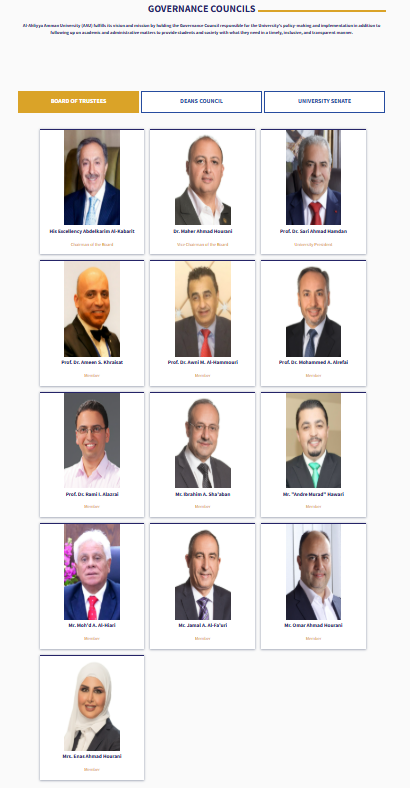
02President’s Office – Government Collaboration & Integrity Oversight

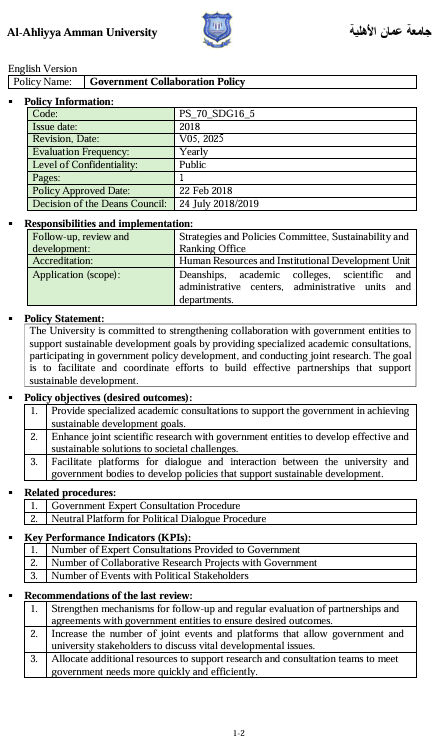
The Office of the President oversees implementation of the Anti-Corruption Policy and engages directly with national integrity agencies and legal authorities in accordance with the Government Collaboration Policy.

03Legal Affairs Unit – Compliance & Ethical Conduct

The Legal Affairs Unit ensures that university practices comply with national anti-corruption laws, reviews academic and administrative processes, and coordinates with external legal bodies.

04Global Engagement Center

The GEC supports international compliance standards by integrating anti-corruption norms into partnerships and agreements with external institutions.

Activities

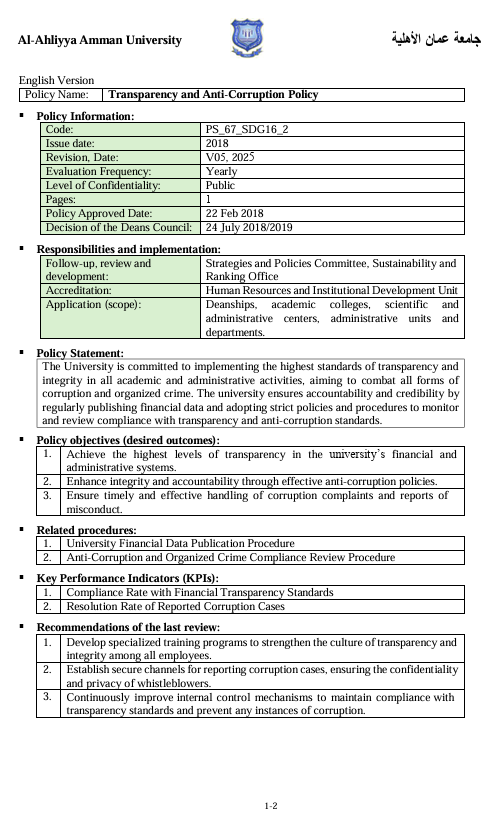
01Publication of the Transparency and Anti-Corruption Policy

AAU publicly publishes its Transparency and Anti-Corruption Policy, outlining the university’s zero-tolerance principles toward corruption, bribery, fraud, misconduct, and organized crime.

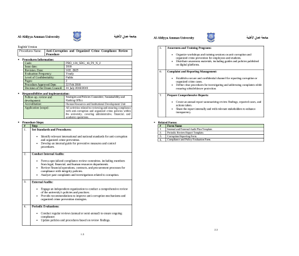
02Implementation of the Anti-Corruption and Organized Crime Compliance Review Procedure

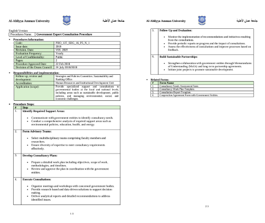
The procedure defines the compliance review system, monitoring mechanisms, reporting pathways, investigation steps, and accountability measures related to corruption and organized crime.

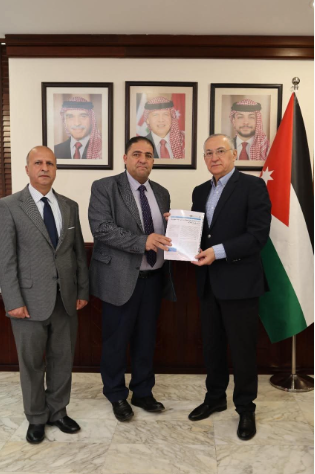
03AAU Submits Study on Criminalizing Corruption in the Private Sector

AAU submitted an official research study on criminalizing corruption in the private sector to the President of the Integrity and Anti-Corruption Commission, demonstrating the university’s active role in supporting national anti-corruption policymaking.

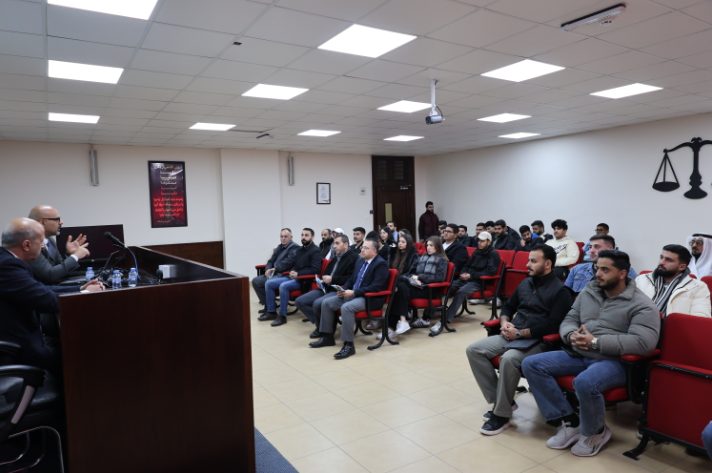
04Seminar on the Personal Data Protection Law

AAU hosted a legal seminar featuring government and regulatory experts to promote compliance, transparency, and lawful data handling – an essential pillar of anti-corruption governance.

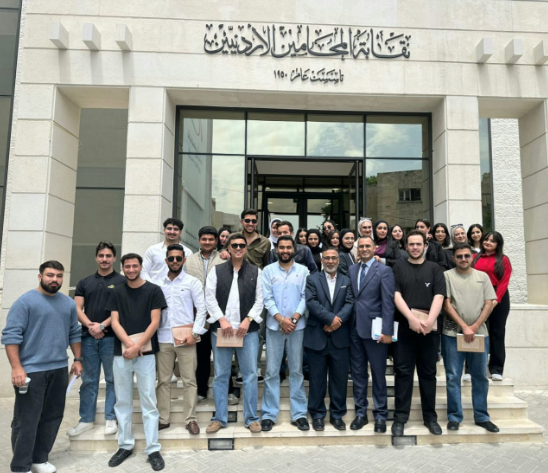
05Visit to the Jordanian Bar Association

AAU collaborates with the Jordanian Bar Association through academic exchanges and professional engagement that reinforce ethical legal practices and integrity standards.

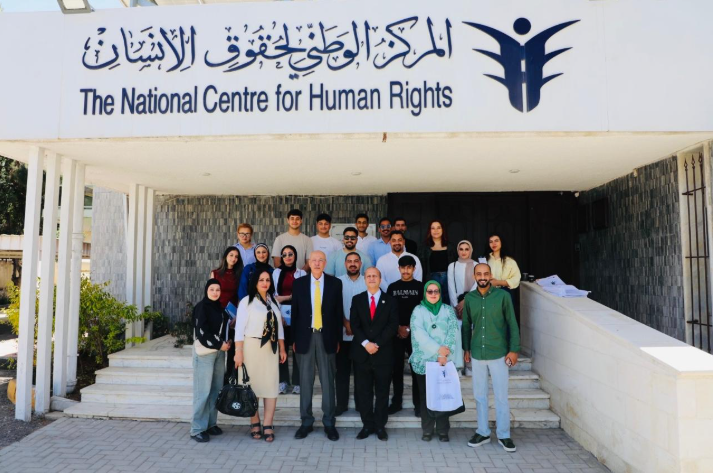
06Integration with Human Rights and Justice Governance

AAU’s visit to the National Center for Human Rights (NCHR) and engagement with its leadership further support the integrity agenda, linking anti-corruption with human rights, justice, and accountability.

07Government Consultation Mechanism

Through the Government Expert Consultation Procedure, the university maintains formal channels for reviewing national policies, participating in governance discussions, and supporting the development of anti-corruption frameworks.

Impact Evaluation & Development Plan

Performance Evaluation

  1. AAU’s anti-corruption commitment is reflected in:
    • Publicly Accessible Principles • Clear, published policy on transparency and anti-corruption; • Accessible compliance procedure specifically targeting organized crime and corruption.
    • Systematic Compliance Approach • Defined mechanisms for reviewing compliance and detecting irregularities; • Legal Affairs and SIRC roles in oversight and documentation.
    • Substantive Policy Engagement • Research and recommendations submitted to JIACC; • Dialogue with national legal and human-rights institutions.

    Development Actions

  2. Action 1: Anti-Corruption Awareness Program: Launch regular awareness campaigns for students and staff explaining AAU’s Transparency and Anti-Corruption Policy and related procedures. Target: At least two campaigns per academic year. Action 2: Annual Anti-Corruption & Integrity Week: Host lectures, workshops, and expert panels with JIACC, judiciary, and legal practitioners. Target: First event by 2026. Action 3: Online Anti-Corruption Portal Section: Create a dedicated section within the Sustainability Portal compiling all anti-corruption policies, procedures, statements, and key research outputs. Target: Launch by 2027. Action 4: Integration in Curriculum and Training: Strengthen explicit reference to AAU’s anti-corruption principles within law, governance, and ethics-related courses and staff induction programs. Action 5: Annual Anti-Corruption Practice & Compliance Summary: Publish a short summary highlighting key integrity initiatives, training, and major anti-corruption-related research each year beginning 2026.

    Benchmarking & Best Practice

  3. AAU aligns its anti-corruption commitment with practices of leading universities that:
    • publicly publish anti-corruption and integrity policies;
    • integrate anti-corruption into governance, procurement, and academic ethics;
    • link research and evidence to national integrity systems.
    The university adopts best practices such as:
    • open access to anti-corruption policy documents;
    • formalized compliance procedures;
    • engagement with national integrity commissions;
    • embedding ethics and integrity in teaching and research.
    Localization to Jordanian Context: AAU’s anti-corruption commitment is aligned with:
    • Jordan’s National Integrity and Anti-Corruption Strategy,
    • national laws addressing corruption, bribery, and organized crime,
    • the mandates of the Integrity and Anti-Corruption Commission (JIACC).
    This ensures that global integrity principles are practically relevant to Jordan’s legal and institutional reality.

Institutional Integration Summary

Anti-corruption commitment at AAU is:
  • defined in the Transparency and Anti-Corruption Policy;
  • operationalized through the Anti-Corruption and Organized Crime Compliance Review Procedure;
  • supported by SIRC, Legal Affairs, Finance, Supplies, and the Faculty of Law;
  • reinforced through policy research and collaboration with national integrity bodies.

This integrated approach ensures that AAU’s stance against corruption, bribery, and organized crime is:

  • publicly declared,
  • formally structured,
  • backed by practice and research,
  • and aligned with SDG 16.5 and 16.6.
View the 2026 edition of this pageRES.AM_ V.01_29 Oct 2026

Contact Office On

  • Email: sdo@ammanu.edu.jo
  • Phone: +962 5 3500211
  • Extension: 2060
  • Address: Al-Ahliyya Amman University / Amman-Jordan- Al Salt Road / Zip-Code (Postal Address): (19328)

  • Fax: +962 6 5336104

Al-Ahliyya Amman University

Email: Public@ammanu.edu.jo


© Copyright Al-Ahliyya Amman University. Amman, Jordan 19111.