1111.4.1

Sustainable Commuting Targets

Measurement and target setting for sustainable commuting (walking, cycling, shared transport, EVs, etc.).

Executive Summary

Al-Ahliyya Amman University (AAU) is committed to promoting sustainable, low-carbon commuting patterns across its campus community in alignment with SDG 11 and national green-mobility goals. Through the Sustainable Commuting and Housing Practices Policy and the Sustainable Commuting Measurement and Promotion Procedure, AAU implements a comprehensive mobility framework that encourages walking, cycling, carpooling, use of electric vehicles (EVs), shared transportation, and reduced reliance on private fossil-fuel cars.

AAU adopts annual sustainability commuting targets to reduce carbon emissions, enhance pedestrian safety, support green mobility infrastructure, and shift the campus toward healthier and more sustainable transport habits. These efforts contribute directly to climate resilience, improved urban mobility, and enhanced community well-being.

Centers and Departments

01Human Resources & Institutional Development Unit

Supports remote working and telecommuting adoption, reducing daily commuting frequency for staff. Oversees flexible-work arrangements to lower transport emissions.

02Sustainability and International Ranking Center (SIRC)

Oversees SDG11 mobility indicators, commuting measurement tools, campus-level reporting, and monitoring of annual commuting targets.

03General Supplies & Services Department

Responsible for managing campus transportation systems, parking design, pedestrian pathways, EV charging infrastructure, and mobility-related facilities.

04Arena Complex

Supports public-access pedestrian pathways, fitness areas, and active mobility initiatives – encouraging walking and promoting health-centric commuting.

05Hourani e-Learning Center (HEC)

Enables hybrid teaching, digital attendance, and online learning systems that reduce transportation demand and commuting frequency.

Activities

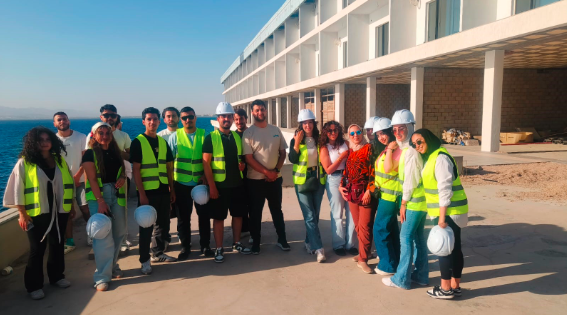
01Educational Visit to the Southern Corniche Walkway – Walkability & Active Mobility

T This field visit promotes understanding of pedestrian-friendly design and sustainable waterfront mobility.

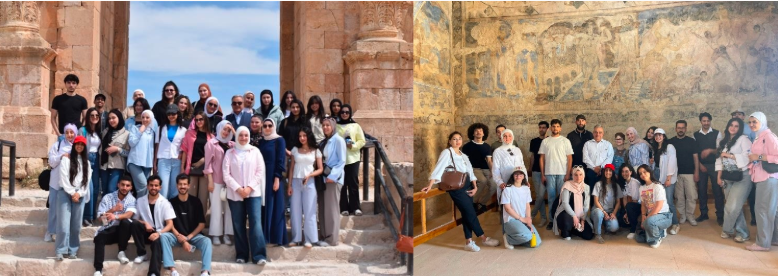
02Field Study to Jerash, Jabal Al-Qala’a & Al-Muwaqqar – Sustainable Movement in Historic Urban Sites

Students experience walkability, pedestrian circulation, and mobility constraints in cultural landscapes.

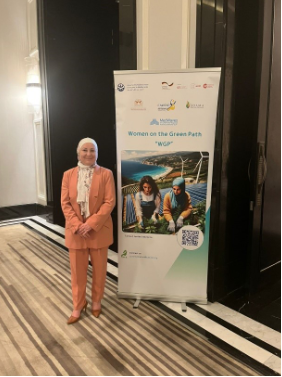
03“Women on the Green Path” Workshop – Sustainable Urban Mobility Awareness

Promotes women’s involvement in environmental mobility, community planning, and walkability-enhancing initiatives.

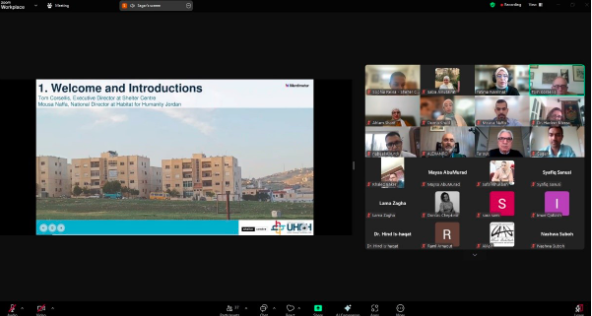
04National Housing Study Participation – Housing, Urban Density & Transport Needs

Supports research on culturally sensitive housing solutions that reduce transport distance, promote walkability, and improve mobility efficiency.

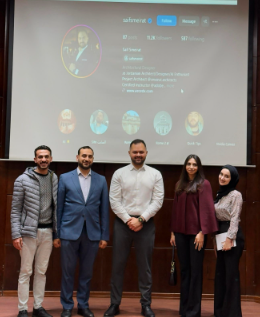
05AI-Based Design Workshops – Modeling Smart, Sustainable Mobility

These workshops allow students to create urban mobility simulations that promote EV adoption, shared mobility systems, and walkable cities.

Sustainable Commuting Measurement Framework

AAU uses a comprehensive set of commuting indicators:
  1. Quantitative Indicators
  • % of students walking to campus• % of staff using shared transport or carpooling • number of EVs registered on campus • number of EV charging points • reduction in private car usage • frequency of remote-working days • bicycle/active-mobility rates
  1. Qualitative Indicators
  • satisfaction with pedestrian environments• perceived safety of walkways • student and staff feedback on mobility challenges • accessibility of mobility facilities
  1. Data Collection Methods
  • annual commuting survey• campus mobility mapping • traffic and parking counts • pedestrian movement observations • HR remote-working reports • digital attendance from HEC

AAU Sustainable Commuting Targets (2024–2027)

Target 1: Increase Walking and On-Foot Commuting

  • Goal: +20% increase in student walking rates by 2027• Method: shaded walkways, pedestrian signage, safer crossings, landscape enhancements.

Target 2: Expand Shared Transport and Carpooling

  • Goal: +25% increase in staff and student carpool usage by 2026• Method: digital carpooling platform, incentives, priority parking.

Target 3: Promote Electric Vehicle (EV) Adoption

  • Goal: 30% of staff vehicles and 10% of student vehicles to be EVs by 2027• Method: install EV charging stations, discounted EV parking.

Target 4: Reduce Private Fossil-Fuel Car Usage

  • Goal: −15% reduction in private car commuting by 2027• Method: remote working, hybrid learning, enhanced public transport collaboration.

Target 5: Increase Remote Working & Hybrid Learning

  • Goal: 2 remote-work days/month for eligible staff by 2025• Goal: +20% hybrid learning adoption by 2026 • Method: HEC digital systems & LMS integration.

Target 6: Improve Cycling & Active Mobility

  • Goal: Introduce cycling lanes and bicycle-parking facilities by 2026 • Goal: +10% increase in active mobility by 2027

Impact Evaluation & Development Plan

A

Performance Evaluation

  1. Structured Assessment Tools

AAU assesses mobility progress through: • annual commuting survey analysis • carbon-emission reduction calculations • EV usage tracking • pedestrian-path condition scoring • safety and accessibility audits

B

Development Actions

  • Action 1: Smart Mobility Dashboard

Real-time digital dashboard measuring mobility trends. Target: operational by 2026.

  • Action 2: Green Mobility Week

Annual awareness event promoting walking, EVs, cycling, and carpooling. Target: launch in 2025.

  • Action 3: Campus Pedestrianization Program

Expand pedestrian-only zones and restrict vehicle circulation. Target: +30% pedestrian coverage by 2027.

  • Action 4: Municipal Transport Partnership

Co-develop bus routes, shuttle services, and accessible mobility solutions. Target: 3 partnerships by 2026.

  • Action 5: Zero-Carbon Transport Roadmap

A long-term strategic plan for sustainable campus mobility. Target: publish roadmap by 2027.

Institutional Integration Summary

AAU integrates sustainable commuting across institutional systems through cooperation between the General Supplies Department, SIRC, HR, Arena Complex, and HEC. These units collectively promote walkability, shared mobility, EV adoption, and reduced transport emissions – strengthening AAU’s contribution to SDG11 and advancing national sustainable mobility efforts.

View the 2026 edition of this pageRES.AM_ V.01_29 Oct 2026

Contact Office On

  • Email: sdo@ammanu.edu.jo
  • Phone: +962 5 3500211
  • Extension: 2060
  • Address: Al-Ahliyya Amman University / Amman-Jordan- Al Salt Road / Zip-Code (Postal Address): (19328)
  • Fax: +962 6 5336104

Al-Ahliyya Amman University

Email: Public@ammanu.edu.jo


© Copyright Al-Ahliyya Amman University. Amman, Jordan 19111.