Contact Office On
Wastewater Treatment
Processes in place to treat and safely manage wastewater produced by the university.
Introduction
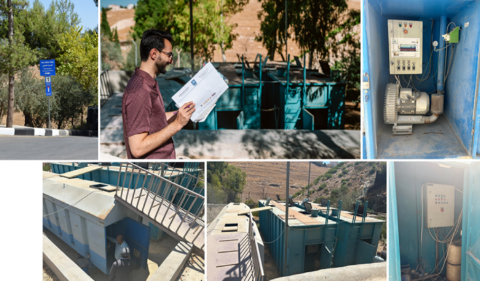
Al-Ahliyya Amman University (AAU) operates a comprehensive and governance-based Wastewater Treatment Framework that ensures all wastewater generated across campus facilities is collected, treated, and managed in full compliance with national environmental regulations and international water-safety standards. The university’s wastewater operations are guided by officially approved institutional documents, including the Wastewater Treatment Procedure, the Water Pollution Prevention Procedure, and the Water Reuse Procedure, all publicly available on AAU’s sustainability webpage.
AAU’s wastewater system follows a structured, multi-stage treatment process that includes collection, preliminary separation, filtration, disinfection, and quality verification before any reuse or discharge. These stages are implemented through a coordinated effort between the Sustainability and Global Ranking Center, the Environmental Health and Safety Unit, and specialized technical teams responsible for treatment operations and infrastructure maintenance.
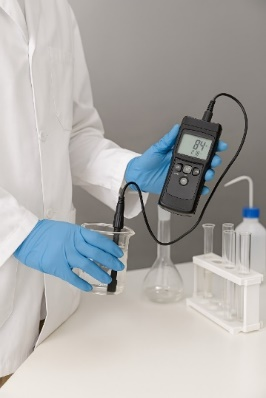
Quality assurance is maintained through periodic laboratory testing, continuous monitoring of treatment parameters, and collaboration with accredited environmental agencies to validate compliance with safety and environmental thresholds. This systematic oversight ensures that treated effluent meets the required standards for safe non-potable applications.
A portion of the treated wastewater is reused within the university’s landscape and irrigation systems under a controlled and monitored reuse program, supporting circular-water management practices and reinforcing AAU’s commitment to sustainable resource use. The remaining treated water is discharged safely in accordance with regulatory guidelines, ensuring full environmental protection.
Through this institutionalized and policy-driven approach, AAU contributes directly to SDG 6.3 (Improvement of Water Quality), while supporting SDG 12 (Responsible Consumption and Production) and SDG 13 (Climate Action) by embedding safe wastewater management and reuse practices within campus operations.

Centers and Departments
02General Supplies and Services Department – Operation and Maintenance of Wastewater Systems
03Pharmacological and Diagnostic Research Center – Water Quality Testing and Laboratory Verification
04Hourani Center for Applied Scientific Research – Applied Studies on Water Reuse Technologies
05Center for Innovation and Entrepreneurship – Student Projects in Water Recycling and Smart Monitoring
06Medical Services Department – Occupational Health and Hygiene Supervision
07Women’s Health Center – Public Health Awareness and Community Education
08Marketing and Communications Unit – Awareness Campaigns and Impact Dissemination
Activities
01Campus Wastewater Treatment Enhancement Project
02Water Quality Monitoring and Verification Program (Ongoing)
03Smart Monitoring and IoT Integration Project (2025)
04Wastewater Safety and Hygiene Training Workshop (2025)
05Community Outreach and Awareness Campaign – “Water Reuse for a Sustainable Future” (2023–2024)
Impact Evaluation & Development Plan
Performance Evaluation
- Treatment Capacity: Covers 100% of wastewater generated on campus.
- Reuse Rate: 20% of total water used is treated and reused (2024–2025).
- Compliance: Treated effluent meets national environmental standards (Jordan Water Regulations No. 85/2015).
- Monitoring Frequency: Monthly internal tests and semi-annual external verification.
- Operational Efficiency: 98% uptime of treatment system; minimal discharge into municipal sewage lines.
- These metrics reflect AAU’s tangible impact in reducing environmental risk, improving operational sustainability, and contributing to national water security goals.
Development Actions
- Action 1: Expand the capacity of treatment tanks to accommodate future population growth and campus expansion. Action 2: Integrate AI-based sensors for real-time monitoring of pH, turbidity, and biological oxygen demand (BOD) in treated water. Action 3: Implement student-led research projects in wastewater innovation – such as membrane filtration, bioreactor systems, and natural treatment wetlands. Action 4: Partner with local municipalities to exchange treated water data and collaborate on regional wastewater reuse initiatives. Action 5: Develop a training and certification program for maintenance teams and students to build technical capacity in wastewater management and environmental engineering.
Benchmarking & Best Practice
- Adopted Practice: AAU aligns its wastewater management practices with the Jordanian Ministry of Water and Irrigation’s national strategy and ISO 14001 environmental management standards. Local Adaptation: The university customizes its approach through decentralized treatment systems and a dual-pipeline reuse network that irrigates green areas and campus gardens efficiently. Future Benchmark Goal (by 2028):
- Treat and reuse ≥50% of all wastewater generated on campus.
- Achieve zero untreated discharge into municipal systems.
- Attain third-party ISO certification for wastewater quality compliance.