1717.3.17

Published Progress – SDG17

Public reporting on university progress and performance related to SDG17 (Partnerships for the Goals).

Introduction

Al-Ahliyya Amman University (AAU) recognizes that the achievement of the Sustainable Development Goals (SDGs) relies fundamentally on effective partnerships, shared knowledge, and cross-sector collaboration. In alignment with SDG 17 – Partnerships for the Goals, the University has established a comprehensive framework that promotes cooperation with government bodies, NGOs, international universities, research institutions, private-sector partners, and global sustainability networks.

Between 2023 and 2025, AAU significantly expanded its partnership ecosystem through:

  • formal cooperation agreements and Memoranda of Understanding supporting SDG integration,
  • joint research projects addressing climate action, health, education, and innovation,
  • regional and international participation in sustainability initiatives such as UI GreenMetric, QS Sustainability, and THE Impact Rankings,
  • transparent public reporting of all partnership activities through the Sustainability Portal, Annual Sustainability Report, and Executive Sustainability Report.

AAU’s partnership strategy is guided by principles of transparency, mutual benefit, capacity building, and global cooperation – directly supporting UN SDG 17 targets (17.14–17.19) and Jordan’s National Agenda for Sustainable Development (2020–2030).

Centers and Departments

01Sustainability and International Ranking Center (SIRC)

Coordinates and reports all partnership data. Publishes verified evidence of AAU’s SDG collaborations.

02Global Engagement Center

Manages international cooperation, student mobility, and cross-border agreements. Facilitates partnerships with global universities and organizations.

03Center for Innovation and Entrepreneurship

Drives innovation-based partnerships with the private sector. Promotes SDG-linked startups and entrepreneurship programs.

04Hourani Center for Applied Scientific Research

Leads joint research projects and innovation-based collaboration. Publishes interdisciplinary outcomes contributing to SDG progress.

05Deanship of Student Affairs

Promotes student participation in SDG and partnership events. Strengthens civic engagement and youth empowerment.

06Marketing and Communications Unit

Disseminates public reports and partnership news. Ensures transparency and stakeholder awareness.

Activities

01AU Sustainability Report 2024–2025

The Sustainability Report 2024–2025 provides comprehensive documentation of AAU’s local and global partnerships supporting the UN SDGs. It includes collaboration outcomes, stakeholder engagement data, and measurable progress under SDG 17.16–17.19.

02Executive Sustainability Report (SDG 17 Section) 2024–2025

The Executive Sustainability Report (SDG 17 Section) summarizes AAU’s partnerships with local and international institutions, NGOs, and governments in advancing the SDGs. It provides verifiable evidence of collaboration, transparency, and impact, directly supporting SDG 17 targets (17.14–17.19).

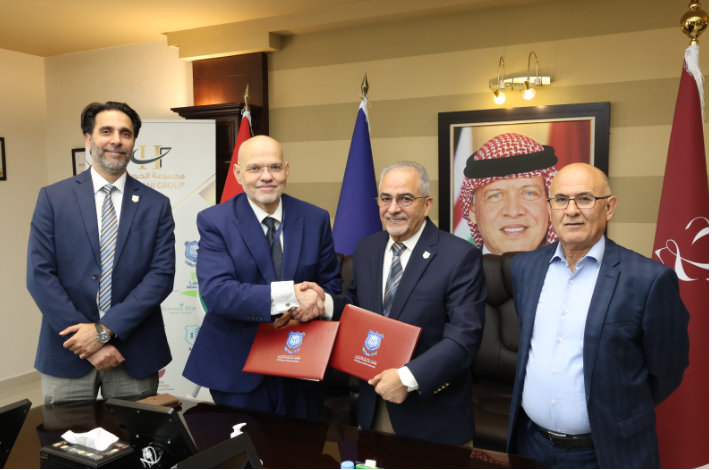
03MoU Between AAU and Global Academy for Digital Health and Artificial Intelligence

AAU signed an MoU with the Global Academy for Digital Health and Artificial Intelligence to develop research, training, and innovation projects. This collaboration promotes digital sustainability and capacity building under SDG 3, SDG 9, and SDG 17.

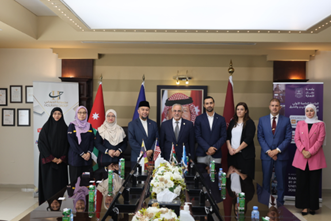
04AAU and MARA University of Technology (UiTM) Malaysia – Cooperation Agreement

AAU established an international cooperation agreement with UiTM Malaysia to enhance academic collaboration, research exchange, and student mobility. This partnership fosters global learning and innovation, advancing SDG 4, SDG 9, and SDG 17.

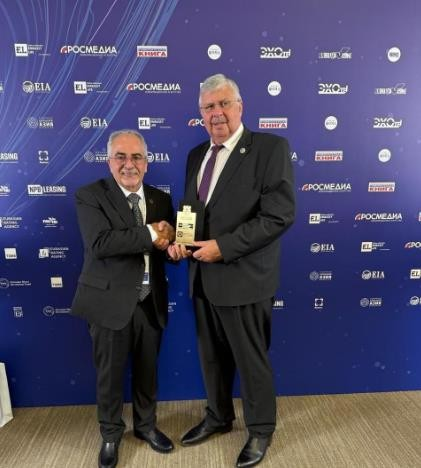
05AAU’s Participation in the First World Public Assembly in Moscow

AAU participated in the First World Public Assembly in Moscow, engaging in international dialogue on peace, innovation, and sustainable development. This global forum supports knowledge exchange and partnership for SDG 17.16 (multi-stakeholder global cooperation).

06Cooperation Agreement with the Arab Global Investors Forum

AAU and the Arab Global Investors Forum signed a cooperation agreement to enhance research and scientific collaboration in sustainable investment and entrepreneurship. The partnership contributes to SDG 8, SDG 9, and SDG 17 through shared innovation initiatives.

Impact Evaluation & Development Plan

A

Performance Evaluation

1. Cross-Sector Partnerships

AAU collaborates with ministries, NGOs, UN agencies, and public-sector organizations to implement SDG-related projects. Partnerships support key areas such as:

  • youth empowerment and political participation, sustainable education and innovation, environmental conservation and circular economy, health, well-being, and community resilience.

These collaborations directly enhance national SDG progress and strengthen AAU’s societal impact.

2. Global Academic Cooperation The University maintains extensive international relations through:
  • joint academic programs, faculty and student exchanges, collaborative scientific conferences, dual-degree pathways with international universities.

These partnerships enhance AAU’s global visibility and enrich SDG-oriented teaching and research.

3. Sustainability Networks Membership AAU is an active and recognized member of:
  • UI GreenMetric (reporting sustainability performance and campus operations), QS Sustainability Ranking (environmental and social impact), THE Impact Ranking (SDG-aligned global benchmarking).

The University contributes data, shares best practices, and participates in international dialogues on sustainability leadership.

4. Research and Policy Engagement AAU supports national and regional SDG dialogue through:
  • participation in international forums (e.g., Arab Universities Union, UI GreenMetric Regional Workshops), contributions to policymaking discussions on education, innovation, and sustainability, joint research that directly addresses environmental and societal challenges.
5. Public Transparency and Evidence Sharing

All partnership outcomes, including new agreements, research outputs, participation summaries, and collaboration results, are:

  • verified by SIRC, reviewed by the University Presidency, publicly published through the AAU Sustainability Portal, Annual Sustainability Report, and Executive Summary.

This ensures full transparency and verifiability of SDG 17 progress.

B

Development Actions

  • Action 1: AAU Global SDG Partnership Platform

Develop a digital platform to connect AAU with global, regional, and national partners and centralize all collaboration opportunities. Target: Launch by 2026; annual public reporting.

  • Action 2: Inter-University SDG Research Network

Expand multi-university research clusters focused on resilience, health innovation, green energy, and digital transformation. Target: 10 new co-authored publications annually.

  • Action 3: NGO and Government Collaboration Program

Strengthen engagement with ministries, civil-society institutions, and international NGOs through structured joint initiatives. Target: 5 new formal agreements each year; outcomes published.

  • Action 4: Capacity-Building and SDG Policy Dialogues

Host regional SDG forums, leadership workshops, youth summits, and expert panels in collaboration with international partners. Target: 3 major events organized by 2028.

  • Action 5: Annual Partnership Impact Report

Publish an annual open-access report analyzing partnership outcomes, research contributions, and SDG advances. Target: Annual publication starting 2025.

C

Benchmarking & Best Practice

AAU benchmarks its SDG 17 strategy with globally recognized institutions including:

  • University of Cambridge (UK) National University of Singapore (NUS) University of Melbourne (Australia) Aarhus University (Denmark)

These institutions are distinguished by strong research partnerships, transparent reporting, and extensive community-engagement networks.

Adopted Best Practices
  • public reporting of partnership indicators and outcomes, strategic alignment of collaborations with SDG priorities, integration of benchmarking results into institutional planning, long-term partnerships with measurable impact, open access to policies, agreements, and reports.
Localization to Jordan’s Context AAU aligns all partnership activities with:
  • Jordan Vision 2033, National Sustainable Development Strategy, Ministry of Higher Education’s Internationalization Framework.

This ensures that global best practices support national development priorities.

Future Goal (by 2028)

Establish the AAU Center for Global Partnerships and Sustainable Development, serving as a regional hub for:

  • international cooperation, SDG research, policy innovation, youth global engagement, capacity-building for sustainable development.

Institutional Integration Summary

At Al-Ahliyya Amman University (AAU), partnership development and reporting under SDG 17 Partnerships for the Goals are coordinated through the Sustainability and International Ranking Center (SIRC) in collaboration with the Global Engagement Center and academic faculties. All partnerships whether with governments, NGOs, or universities are documented, verified, and publicly published via the Sustainability Portal, Annual Reports, and Executive Summaries.

This governance framework ensures transparency, accountability, and inclusiveness in all collaboration efforts, aligning with UN SDG 17 targets (17.14–17.19). Through academic cooperation, knowledge exchange, and international networking, AAU continuously enhances its global visibility and impact, positioning itself as a regional leader in advancing sustainable partnerships and global collaboration.

By embedding SDG partnerships into its academic strategy, AAU ensures that every collaboration contributes tangibly to education, innovation, and community well-being, reinforcing its role as a model institution for SDG 17 (Partnerships for the Goals).

Contact Office On

  • Email: sdo@ammanu.edu.jo
  • Phone: +962 5 3500211
  • Extension: 2060
  • Address: Al-Ahliyya Amman University / Amman-Jordan- Al Salt Road / Zip-Code (Postal Address): (19328)
  • Fax: +962 6 5336104

Al-Ahliyya Amman University

Email: Public@ammanu.edu.jo


© Copyright Al-Ahliyya Amman University. Amman, Jordan 19111.