1717.3.7

Published Progress – SDG7

Public reporting on university progress and performance related to SDG7 (Affordable and Clean Energy).

Executive Summary

Al-Ahliyya Amman University (AAU) is fully committed to achieving energy sustainability and transparency, aligning its operations with SDG 7 – Affordable and Clean Energy and Jordan’s National Energy Strategy (2020–2030). Through the Sustainability & International Ranking Center (SIRC), the Facilities and Environmental Services Department, and the Finance and Planning Units, AAU publicly reports measurable progress in renewable-energy adoption, energy efficiency, and low-carbon performance.

Between 2023 and 2025, AAU recorded transformational achievements including:
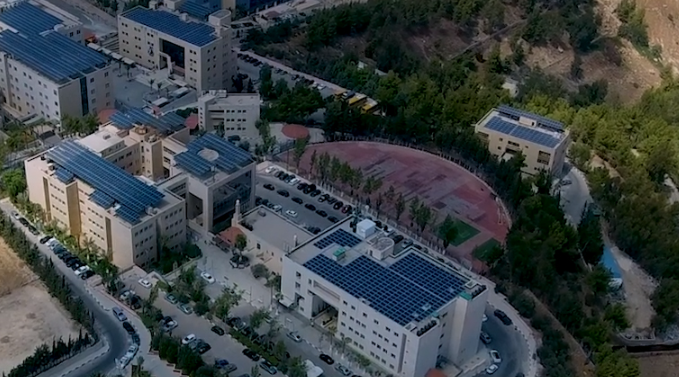
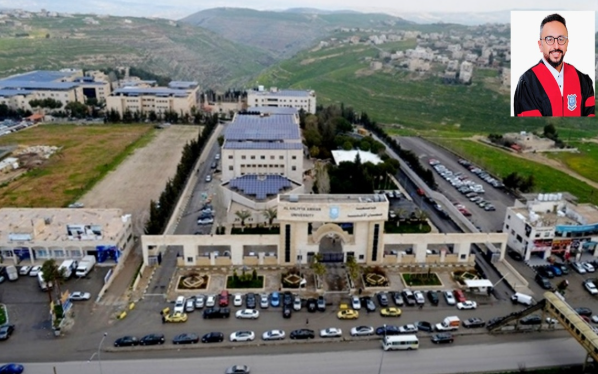
  • achieving 100 % coverage of campus electricity demand from on-site solar-PV systems;
  • reaching a net-zero balance between total campus electricity consumption and on-site renewable generation (113.37 % solar generation relative to demand);
  • integrating smart-metering and energy-monitoring systems across university facilities; and
  • publishing detailed energy-performance data through open sustainability reports and online platforms.

All information is publicly accessible on AAU’s Sustainability Portal, ensuring accuracy, accountability, and compliance with UN SDG 7 targets (7.1–7.3) and SDG 17 (Partnerships for the Goals).

Centers and Departments

01Sustainability and International Ranking Center (SIRC)

Coordinates data collection and verification of energy reports. Publishes annual renewable energy metrics and zero-carbon data.

02General Supplies and Services Department

Oversees solar PV systems and energy infrastructure. Provides verified energy generation and efficiency statistics.

03Finance Department

Tracks investments in renewable projects. Publishes annual financial allocation reports for clean-energy projects.

04Deanship of Scientific Research

Promotes research on renewable energy and carbon management. Publishes applied research and innovation outcomes supporting SDG 7.

05Marketing and Communications Unit

Disseminates public reports and success stories. Enhances visibility of AAU’s clean-energy achievements.

Activities

01AAU Sustainability Report 2024 – 2025

AAU’s Sustainability Report 2024–2025 details renewable-energy generation, smart-energy infrastructure, and verified CO₂ reductions. The report confirms AAU’s achievement of net-zero carbon emissions and 113 % renewable-energy coverage, publicly demonstrating leadership in SDG 7 (Affordable and Clean Energy).

02Executive Sustainability Report (SDG 7 Section) 2024–2025

The Executive Sustainability Report presents a concise summary of AAU’s energy-transition performance, highlighting renewable integration, zero-carbon verification, and energy-efficiency improvements. This public disclosure ensures accountability and alignment with SDG 7.2 (Renewable Energy Share) and SDG 13 (Climate Action).

03AAU Digital Library Portal – Free and Open Access to Educational Resources for Non-Students

Al-Ahliyya Amman University announced the expansion of its on-campus solar-power project, reinforcing its commitment to renewable energy and environmental responsibility. The project extension increases the University’s clean-energy generation capacity, ensuring continued achievement of net-zero carbon operations and enhancing resilience against grid dependency. Publicly reported through AAU’s official news portal, this initiative reflects transparency and measurable progress toward SDG 7.2 (Renewable Energy Share), SDG 13 (Climate Action), and SDG 17 (Partnerships for the Goals).

04Dr. Hijazi Showcases AAU’s Sustainability Leadership on SBS Australia

Dr. Hijazi represented Al-Ahliyya Amman University on SBS Australia, highlighting the university’s pioneering achievements in renewable energy, innovation, and sustainability leadership. During the interview, he discussed AAU’s successful transition to 100 % solar power, its net-zero carbon campus initiative, and its role in advancing sustainable engineering education. This internationally broadcasted segment enhanced AAU’s global visibility and transparency, demonstrating measurable progress toward SDG 7 (Affordable and Clean Energy), SDG 9 (Innovation and Infrastructure), and SDG 17 (Partnerships for the Goals).

05University Hosts Beach Cleanup at Aqaba Sea to Support Marine Conservation Efforts

Al-Ahliyya Amman University organized a large-scale beach cleanup campaign at the Aqaba Sea as part of its commitment to clean water and ecosystem protection. The initiative brought together students, staff, and NGO partners to remove marine waste and raise awareness about water pollution prevention. Publicly reported on the university’s official news portal, this activity exemplifies AAU’s transparent commitment to SDG 6.3 (Water Quality) and SDG 17 (Partnerships for the Goals) through community engagement and environmental stewardship.

Impact Evaluation & Development Plan

Performance Evaluation

  • Transparent Energy ReportingAAU’s sustainability reports disclose total kWh consumption, renewable-generation capacity, and carbon-intensity indicators. The 2024 Sustainability Report confirms that campus solar-PV systems generated 113.37 % of total annual electricity demand, allowing AAU to offset grid-supplied electricity and effectively operate on 100 % renewable electricity coverage.
  • Renewable-Energy InfrastructureThe University operates advanced ground-mounted and rooftop solar-PV systems linked to smart inverters and digital monitoring platforms. These systems provide real-time visibility on generation performance, load coverage, and efficiency metrics, supporting data-driven decision-making and transparent public reporting.
  • Energy-Efficiency MeasuresAAU has implemented a comprehensive energy-efficiency program that includes:
  • replacing conventional lighting with LED technology across all academic, administrative, and outdoor areas;
  • deploying motion-sensor and daylight-controlled lighting systems;
  • introducing smart building-management systems (BMS) and optimized HVAC schedules to reduce peak loads and unnecessary consumption.
  1. These measures have contributed to significant reductions in electricity intensity per square meter and per capita, as reported in AAU’s Sustainability Report 2024–2025.
    • Low-Carbon Operations and Clean-Energy CultureAAU has significantly reduced its dependence on conventional energy sources by maximizing solar-PV utilization, optimizing building operations, and gradually introducing electric vehicles and EV-charging infrastructure into its mobility ecosystem. This transition supports Jordan’s Green Growth Plan and reinforces the university’s role as a national model for clean-energy adoption in higher education.
    • Public Access and Verification All energy-related results are published annually and verified internally by SIRC in coordination with the Facilities and Environmental Services Department. The validated datasets are then used as official evidence in AAU’s submissions to the Times Higher Education Impact Rankings and other international sustainability frameworks, demonstrating AAU’s commitment to transparency and accountability.

    Development Actions

  2. Action 1: AAU Energy Transparency Dashboard (2025–2028) Develop an online dashboard displaying near-real-time data on solar energy production, campus electricity consumption, and emissions avoided. Target: Dashboard operational by 2026; updated at least quarterly. Action 2: Renewable-Energy Storage Pilot Project (2025–2028) Introduce battery-storage systems to capture surplus solar generation and enhance campus energy resilience. Target: Battery systems covering at least 10 % of peak campus load by 2027. Action 3: Smart Energy Education Program (2025–2028) Launch interdisciplinary training modules and practical workshops on renewable energy, energy efficiency, and smart-grid technologies for students and staff. Target: 500 students and trainees engaged annually; learning outcomes reported in AAU’s Sustainability Report. Action 4: Community Solar and Knowledge Partnerships (2025–2028) Expand AAU’s role as a regional clean-energy partner by sharing expertise and exploring joint projects with schools, municipalities, and neighboring institutions. Target: At least three memoranda of understanding (MoUs) signed with external partners by 2028 focusing on clean-energy awareness and capacity building. Action 5: Annual Energy and Carbon Disclosure Report (2025–2028) Publish a dedicated Energy and Carbon Disclosure Report that consolidates all energy, emissions, and efficiency data for public use. Target: Public report released every May starting in 2025, aligned with international reporting formats.

    Benchmarking & Best Practice

  3. Benchmarking Reference: AAU benchmarks its SDG 7 public-reporting framework against leading institutions such as:
    • University of Melbourne (Australia),
    • University of Nottingham (UK), and
    • American University of Sharjah (UAE),
    all recognized for transparent renewable-energy disclosure and integrated clean-energy strategies. Adopted Practices From these models, AAU adopts:
    • publicly accessible renewable-energy and energy-efficiency reports;
    • verified monitoring of energy performance and associated CO₂ reductions;
    • integration of energy indicators into institutional planning and performance audits;
    • linking clean-energy achievements with teaching, research, and community outreach.
    Localization to Jordan’s Context AAU aligns its clean-energy initiatives with:
    • Jordan’s Energy Efficiency Action Plan (2022–2030), and
    • the National Green Growth Plan,
    ensuring that all campus-level actions contribute to national targets on renewable energy, efficiency, and emissions reduction while maintaining international comparability. Future Goal (by 2028) Establish the AAU Renewable Energy Innovation Hub, combining applied research, student projects, industry collaboration, and community engagement to develop and disseminate regional clean-energy solutions. The Hub will serve as a catalyst for innovation, training, and technology transfer in support of SDG 7 and SDG 13. Institutional Integration Summary At Al-Ahliyya Amman University (AAU), the monitoring, verification, and public reporting of SDG 7 Affordable and Clean Energy are governed through an integrated institutional framework that ensures transparency, accountability, and continuous improvement. The Sustainability & International Ranking Center (SIRC) acts as the central coordinating body, consolidating renewable-energy and energy-efficiency data from:
    • the Facilities and Environmental Services Department,
    • the Finance Department,
    • the Information Technology Center, and
    • relevant academic and research units.
    Each department records specific indicators, including total solar-energy production, grid electricity consumption, energy-intensity ratios, and efficiency gains from LED retrofits, smart lighting, and BMS systems. SIRC verifies these datasets for accuracy and consistency before submitting them to the University Presidency for review and approval. Once approved, the data are published through AAU’s Sustainability Portal, the Annual Sustainability Report, the Executive Sustainability Report (SDG 7 Section), and related news items such as the AAU Sustainability Report 2024–2025 and media features, including Dr. Hijazi’s presentation of AAU’s sustainability leadership on SBS Australia. This transparent data-governance chain ensures that every energy-related achievement is evidence-based, externally verifiable, and publicly accessible, aligning with UN SDG 7 targets (7.1–7.3) and Jordan’s National Energy Strategy (2020–2030). By institutionalizing renewable-energy monitoring and open reporting, AAU has embedded sustainability accountability into its operational and academic structure transforming clean-energy management from a technical project into a university-wide culture of innovation and responsibility. Through this integrated framework, AAU reaffirms its leadership in promoting affordable, reliable, sustainable, and modern energy for all, directly contributing to SDG 7 (Affordable and Clean Energy) and SDG 17 (Partnerships for the Goals).
View the 2026 edition of this pageRES.AM_ V.01_29 Oct 2026

Contact Office On

  • Email: sdo@ammanu.edu.jo
  • Phone: +962 5 3500211
  • Extension: 2060
  • Address: Al-Ahliyya Amman University / Amman-Jordan- Al Salt Road / Zip-Code (Postal Address): (19328)
  • Fax: +962 6 5336104

Al-Ahliyya Amman University

Email: Public@ammanu.edu.jo


© Copyright Al-Ahliyya Amman University. Amman, Jordan 19111.