1616.3.2

Capacity Building for Lawmakers

Educational programs and capacity-building initiatives for policymakers and law-makers.

Executive Summary

Al-Ahliyya Amman University (AAU) plays a strategic national role in supporting policymaking, legislative development, and justice-sector reform by providing structured educational programs, specialized seminars, and institutional platforms aimed at strengthening the capacities of lawmakers, regulators, legal practitioners, and public-sector officials.

Through its Faculty of Law, Sustainability & International Ranking Center (SIRC), and its academic–government partnership ecosystem, AAU delivers evidence-based capacity-building initiatives aligned with SDG 16 targets on effective institutions, legal reform, and accountable governance.

Centers and Departments

01Faculty of Law

The Faculty of Law is the primary driver of legal capacity building at AAU. It develops specialized programs, hosts policy discussions, trains judicial-sector personnel, and supports law reform through research and academic engagement.

02Sustainability & International Ranking Center (SIRC)

SIRC documents SDG16-aligned capacity-building activities and coordinates cross-sector partnerships with legal and governmental institutions to support policymakers.

03Global Engagement Center (GEC)

GEC facilitates external cooperation with ministries, national institutions, legal bodies, and international organizations that participate in training and capacity-building projects.

04Hourani Center for Applied Scientific Research (HCASR)

HCASR contributes evidence-based research and policy briefings that support lawmakers in developing modern legislative and regulatory frameworks.

05Teaching & Learning Center (TLC)

TLC supports training programs, workshops, and professional development modules that strengthen public-sector and legal-sector competencies.

Activities

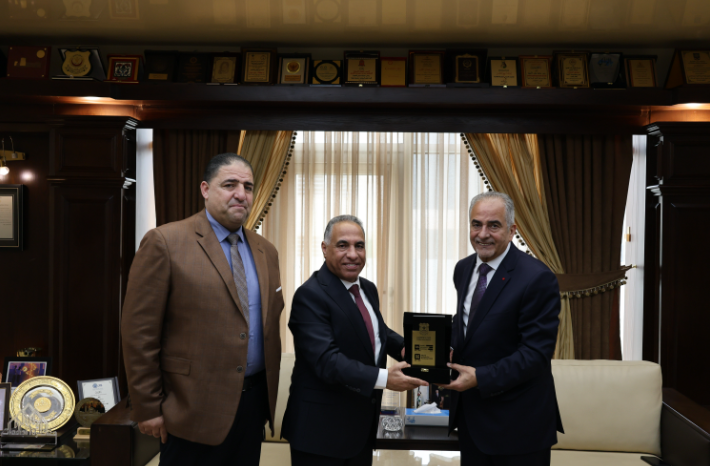
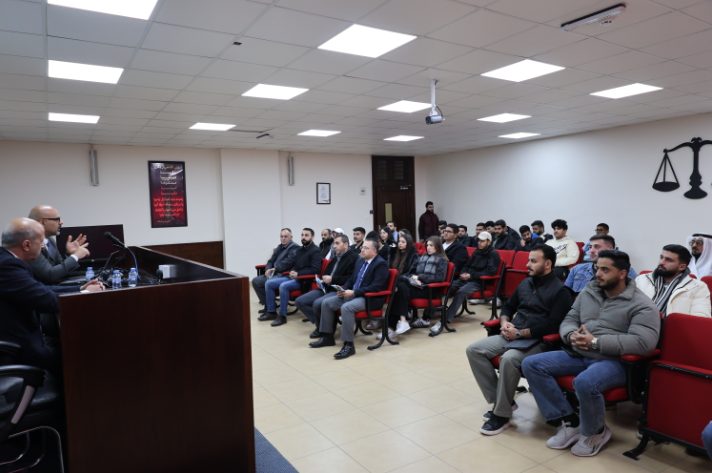
01Seminar with the Minister of State for Legal Affairs – Judicial–Arbitration Reform

AAU hosted H.E. Dr. Fayez Malfieh Al-Qudah, Minister of State for Legal Affairs, who delivered a policy-oriented academic session on:
  • legislative amendments to the Jordanian Arbitration Law (2018)
  • judiciary–arbitration interactions
  • legal reform implications at national and international levels
This seminar strengthened judicial knowledge, supported legislative reform, and provided a neutral academic platform for legislative analysis.

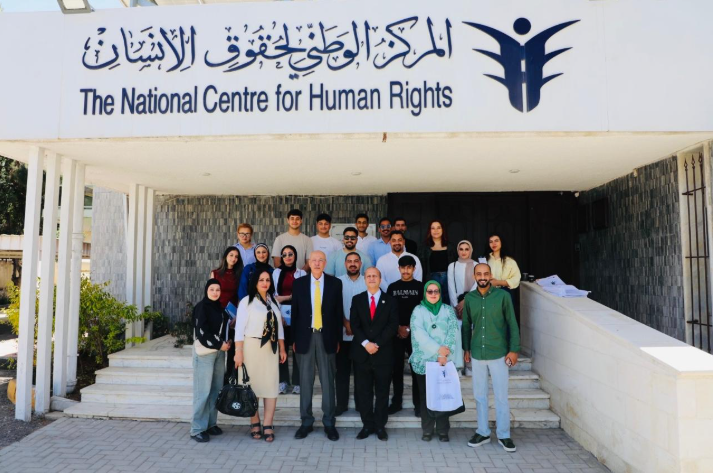
02Human Rights Governance Training – National Center for Human Rights Official Source:

Through an official visit to the NCHR, AAU engaged with:
  • the Commissioner General for Human Rights
  • the Protection Commissioner
  • the Awareness and Human Rights Culture Unit
They provided policy guidance on:
  • national human-rights monitoring,
  • complaint-handling procedures,
  • treaty-compliance mechanisms,
  • challenges in human-rights enforcement.
This exposure directly builds capacities in rights-based governance.

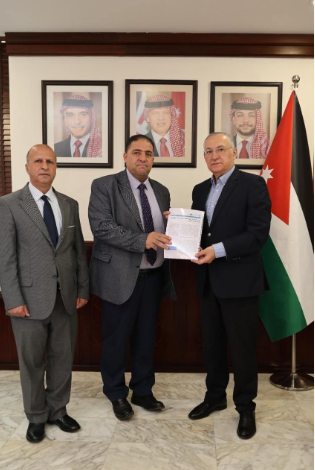
03Research Submitted to the Integrity & Anti-Corruption Commission – Anti-Corruption Legislative Development

AAU developed and submitted an advanced legal-policy study titled: “Criminalizing Corruption in the Private Sector” to the Chairman of JIACC. The study recommended:
  • criminalizing private-sector corruption,
  • filling legislative gaps,
  • aligning national laws with international conventions.
This represents one of AAU’s strongest contributions to national legislative capacity building.

04Personal Data Protection Law Seminar – Digital Legislation Literacy

The seminar featured Eng. Tawfiq Abu Bakr, Director of the Personal Data Protection Directorate at the Ministry of Digital Economy and Entrepreneurship. Key contributions included:
  • stages of drafting the Personal Data Protection Law
  • enforcement frameworks
  • criminalized digital behaviors
  • obligations for institutions and individuals
This strengthened capacity in digital legislation and governance for policymakers, lawmakers, and future legal advisors.

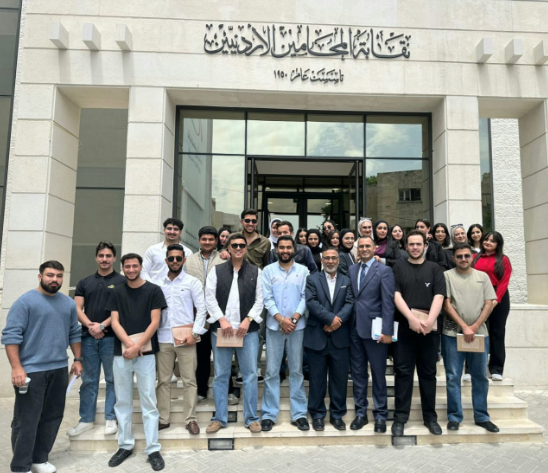
05Legal-Profession Governance & Ethics – Jordanian Bar Association

Participants engaged in discussions with legal-profession regulators on:
  • legal-ethics standards
  • professional accountability
  • disciplinary systems
  • regulatory policies governing lawyers in Jordan
This strengthened understanding of governance within legal professions.

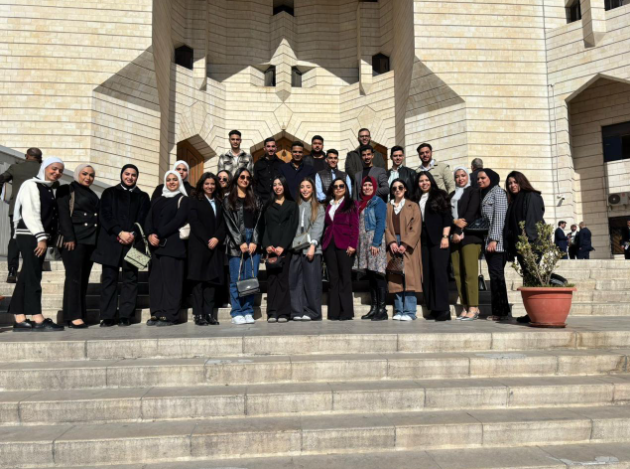
06Judicial Procedures & Court Governance Training – Palace of Justice

Students and future policymakers were trained in:
  • civil lawsuit registration
  • digital litigation systems
  • conciliation courts
  • economic and commercial chambers
  • mediation chambers
This provided real-world capacity building in judicial governance, procedural justice, and court-system modernization.

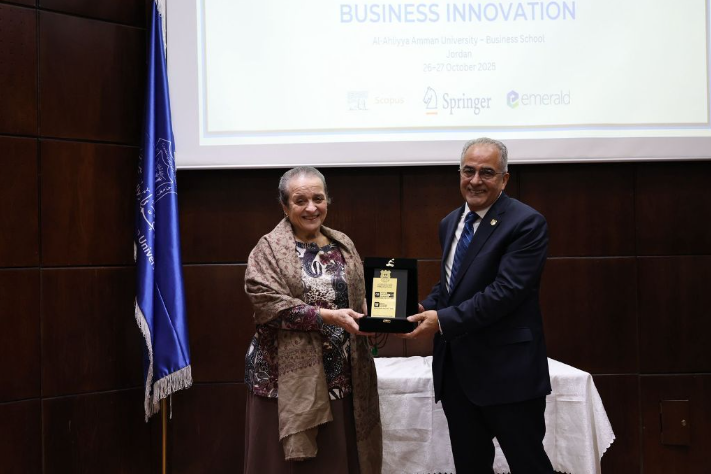
07ICDFB 2025 – Digital Transformation Conference

Under the patronage of HRH Princess Alia, AAU hosted an international conference attended by:
  • legislators
  • policymakers
  • regulatory experts
  • international researchers
The conference enhanced capacity in:
  • FinTech regulation
  • digital transformation governance
  • data-driven policy innovation
  • institutional modernization

Impact Evaluation & Development Plan

A

Performance Evaluation

  1. Legislative Awareness and Policy Education
AAU provides high-level legislative training and knowledge transfer through:
  • seminars featuring ministers, government directors, commissioners, and senior legal officials, • policy-focused academic events such as the seminar on Judicial–Arbitration Reform, • expert sessions on digital legislative frameworks (e.g., Personal Data Protection Law Seminar).

These activities reinforce AAU’s role in national legislative development and promote SDG 16.6 (effective, accountable institutions).

  1. Anti-Corruption and Governance Reform Capacity
AAU strengthens national anti-corruption capacity through:
  • submission of the major legal-policy study “Criminalizing Corruption in the Private Sector” to JIACC; • direct dialogue with the Chairman of the Integrity and Anti-Corruption Commission; • academic research aligned with international anti-corruption conventions.

This elevates AAU as a contributor to SDG 16.5 (substantially reduce corruption).

  1. Human Rights, Legal Ethics, and Justice-Sector Capacity Building
AAU enhances human-rights governance and civic responsibility by:
  • conducting official visits to the National Center for Human Rights (NCHR), • participating in discussions on national human-rights monitoring systems and complaints mechanisms, • integrating human-rights policy and enforcement understanding into academic programs.

These practices advance SDG 16.3 (rule of law) and SDG 16.10 (public access to information).

  1. Judicial Governance Training
AAU strengthens judicial-system understanding through:
  • field visits to the Palace of Justice, • exposure to courts of conciliation, first instance courts, economic and commercial chambers, and mediation courts, • training on civil procedures, litigation organization, and digital judicial systems.

This contributes to knowledge of procedural justice and judicial modernization.

  1. Legal Governance, Ethics, and Professional Accountability
AAU engages with the Jordanian Bar Association (JBA) to strengthen:
  • understanding of professional ethics, • governance of legal practice, • disciplinary systems, • and institutional accountability within the legal profession.

This builds future practitioners with strong ethical and governance competencies.

  1. Digital-Governance Capacity and Policy Innovation

Through the ICDFB 2025 Conference under the patronage of HRH Princess Alia bint Al Hussein, AAU enhances national capacity in:

  • FinTech legislation, • digital-governance frameworks, • institutional innovation, • multi-stakeholder policy collaboration.

This reinforces SDG 16.6 and SDG 17 partnerships.

B

Development Actions

  • Action 1: Legislative Capacity-Building Unit: Establish a dedicated unit in the Faculty of Law for training lawmakers, judges, legal advisors, and policymakers. Target: Operational by 2026.
  • Action 2: Annual “Policy & Lawmakers Academy”: Offer structured workshops on arbitration law, cyber legislation, human-rights governance, and anti-corruption frameworks. Target: Minimum 300 participants per year.
  • Action 3: Legal Policy Brief Series: Publish annual policy briefs addressing contemporary legal issues and reform proposals. Target: 10+ briefs per year.
  • Action 4: Judicial Modernization Training Program: Collaborate with the Ministry of Justice and courts to support digital-litigation literacy and judicial-capacity enhancement. Target: Two programs annually.
  • Action 5: Human Rights & Anti-Corruption Dialogue Forum: Annual forum featuring NCHR, JIACC, and legal experts to discuss governance improvement and legal reform. Target: Launch 2026.
C

Benchmarking & Best Practice

AAU benchmarks its legislative capacity-building model against leading global institutions such as:

  • University College London (UCL) – public-policy education and legal reform, • University of Melbourne – judicial training and governance studies, • American University of Beirut (AUB) – civic engagement and legislative dialogue, • University of Cape Town – justice-sector and human-rights policy leadership.
Adopted Best Practices:
  • integrating legislative education in academic curricula; • ensuring direct engagement with policymakers and government authorities; • linking legal research outputs with national policy needs; • public dissemination of legislative training materials.
AAU aligns all legislative capacity-building efforts with:
  • Jordan’s National Integrity and Anti-Corruption Strategy (2020–2025); • Digital Economy & Entrepreneurship legislation; • National Human Rights Framework (NCHR); • Judicial modernization priorities; • the Ministry of Higher Education’s governance and ethics standards.

This ensures global practices are customized to Jordan’s legal, justice, and governance landscape.

Institutional Integration Summary

Legislative capacity building at AAU is the result of coordinated work across:
  • Faculty of Law – academic leadership and advanced training, • Sustainability & International Ranking Center (SIRC) – verification and reporting, • Global Engagement Center – government partnerships, • Hourani Center for Applied Scientific Research – policy research support, • Deanship of Student Affairs – civic engagement and youth participation.

This framework guarantees that AAU’s contributions to legislative development are:

  • measurable, • verifiable, • publicly accessible, • aligned with SDG 16.3, 16.5, 16.6, 16.7, 16.10, • and consistent with SDG 17 (Partnerships for the Goals).
View the 2026 edition of this pageRES.AM_ V.01_29 Oct 2026

Contact Office On

  • Email: sdo@ammanu.edu.jo
  • Phone: +962 5 3500211
  • Extension: 2060
  • Address: Al-Ahliyya Amman University / Amman-Jordan- Al Salt Road / Zip-Code (Postal Address): (19328)
  • Fax: +962 6 5336104

Al-Ahliyya Amman University

Email: Public@ammanu.edu.jo


© Copyright Al-Ahliyya Amman University. Amman, Jordan 19111.