1111.2.1

Public Access – Cultural Buildings

Provision of public access to university buildings, monuments, or heritage landscapes of cultural significance.

Executive Summary

Al-Ahliyya Amman University (AAU) ensures inclusive and equitable public access to cultural spaces, heritage landscapes, and architectural facilities as part of its commitment to Sustainable Cities and Communities (SDG 11). Through a comprehensive system of policies including the Public Access to Heritage Buildings and Landscapes Procedure and the Arts and Cultural Heritage Support Policy AAU facilitates community engagement with cultural assets, promotes appreciation of Jordan’s historical identity, and supports cultural participation for students, visitors, and the wider public.

AAU’s campus includes open-access cultural facilities, exhibition spaces, landscaped environments, studios, and design laboratories that welcome community members for learning, exploration, and cultural enrichment. In addition, the university organizes field visits, public workshops, heritage-focused activities, and open events that actively connect the community with national cultural sites such as Jerash, Jabal Al-Qala’a, and Al-Muwaqqar.

Through these initiatives, AAU plays a vital role in strengthening cultural resilience, preserving heritage knowledge, and promoting the cultural dimension of sustainable urban development in Jordan.

Centers and Departments

01Faculty of Architecture and Design

Responsible for organizing field visits to national heritage sites and integrating cultural preservation into academic programs. The faculty hosts exhibitions, public lectures, and design showcases open to students and community members.

02Global Engagement Center (GEC)

The GEC promotes cultural exchange, international collaboration, and public-access cultural initiatives. It supports community engagement through multicultural programs, international heritage dialogues, and open-access educational activities hosted on campus.

03Arena Complex

AAU’s largest public-access facility, the Arena hosts cultural exhibitions, community events, concerts, art showcases, and student-led cultural fairs. The complex serves as an inclusive space welcoming students, visitors, and local community groups.

04Teaching and Learning Center (TLC)

TLC supports heritage literacy, cultural education, and public lectures that are open to the community. It facilitates programs focused on cultural identity, historical awareness, and community-based learning.

05Sustainability and International Ranking Center (SIRC)

SIRC oversees SDG11 policy implementation, public-access documentation, and monitoring of cultural-engagement initiatives. It ensures that cultural-access programs, heritage activities, and public-engagement data are accurately reported through AAU’s sustainability systems.

Activities

01Scientific Visits to Historical Sites (Jerash, Jabal Al-Qala’a, Al-Muwaqqar)

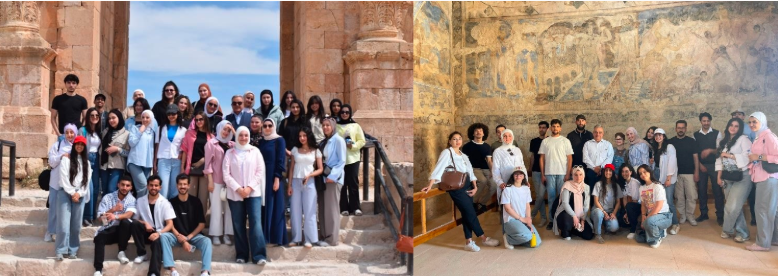
The Department of Architectural Engineering organized educational field visits to major archaeological sites in Jordan. These visits provided open educational access to culturally significant heritage landscapes, enabling students and community participants to engage directly with national heritage.

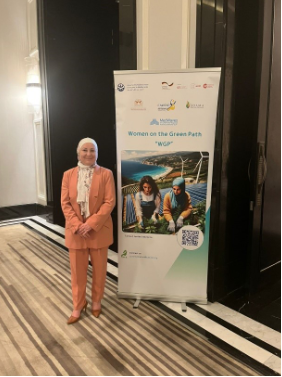
02National Workshop Participation – “Women on the Green Path”

The Faculty of Architecture and Design participated in a national workshop promoting women’s role in environmental sustainability, cultural preservation, and community development. This workshop was open to academic and community stakeholders, enhancing cultural awareness and public engagement.

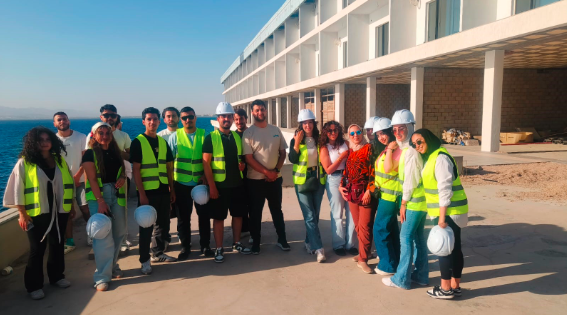
03Educational Visit to the Southern Corniche Walkway in Aqaba

The Interior Design Department organized an open educational trip to Aqaba’s waterfront development project. The visit exposed students and community participants to sustainable public-space design and urban cultural landscapes.

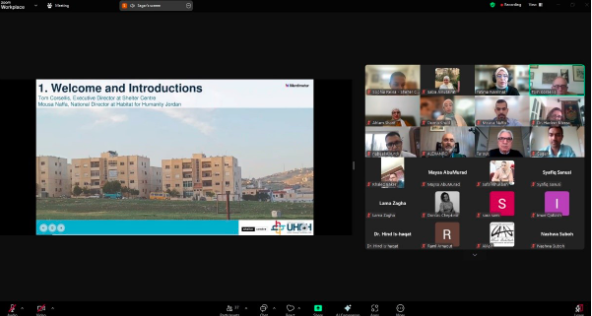
04Advisory Participation in the National Study on Decent & Cultural Housing in Jordan

The Faculty of Architecture and Design served on the advisory committee for a national housing study. This engagement strengthened AAU’s leadership in culturally sensitive urban planning and expanded public involvement in shaping community housing policies.

05Workshop: “Design Using Artificial Intelligence”

The Faculty of Architecture and Design hosted a public workshop introducing participants to AI-enabled creative design. The event was open to students and external visitors, enhancing public access to creative cultural innovation tools and modern design practices.

Impact Evaluation & Development Plan

A

Performance Evaluation

  1. Structured Assessment Tools

AAU employs comprehensive assessment tools to evaluate public cultural access, including: • heritage-access audit tools; • cultural engagement rubrics; • visitor-experience surveys; • walkability and accessibility evaluations; • public-space utilization records.

These tools assess cultural inclusion, accessibility, heritage awareness, and community engagement levels.

  1. Annual Assessment Cycles

Annual evaluations are carried out across all cultural spaces and heritage-focused programs. Data include: • public participation rates, • frequency of cultural activities, • accessibility improvements, • community-engagement outcomes.

This ensures continuous enhancement of cultural access and preservation efforts.

  1. Quantitative & Qualitative Indicators

Indicators include: • number of heritage-site visits organized per year; • public attendance at cultural events; • accessibility improvements in campus cultural facilities; • visitor feedback on cultural learning; • qualitative reflections from field visits and workshops.

  1. Integration with Curriculum

Findings from cultural-access assessments inform course design in architecture, interior design, urban planning, and cultural studies. Capstone projects increasingly incorporate: • heritage conservation, • public-space design, • cultural landscape mapping, • community-based urban planning.

  1. Transparency and Public Reporting

All SDG11 cultural-access data are validated by SIRC and published in: • AAU Sustainability Report 2024–2025 • SDG11 Executive Sustainability Report • AAU Sustainability Portal

ensuring full transparency and compliance with global SDG reporting standards.
B

Development Actions

  • Action 1: Heritage Public-Access Expansion Program

Increase public access to campus cultural facilities and heritage events. Target: 15 public-access activities annually.

  • Action 2: Cultural Spaces Accessibility Enhancement

Upgrade pathways, signage, and access points to ensure universal access to cultural buildings. Target: Full accessibility compliance by 2027.

  • Action 3: Community Heritage Education Initiative

Develop annual heritage-awareness programs for schools, NGOs, and local communities. Target: Reach 1,000 community participants annually.

  • Action 4: Digital Cultural Heritage Platform

Launch an online platform showcasing AAU’s cultural spaces, research, heritage workshops, and virtual tours. Target: Platform operational by 2026.

  • Action 5: Municipal Heritage Collaboration

Collaborate annually with municipalities on cultural preservation and public-space development projects. Target: Minimum 3 collaborative projects per year.

C

Benchmarking & Best Practice

AAU benchmarks its cultural-access framework against leading global institutions: • University of Cambridge (Heritage Access & Cultural Landscapes) • University of British Columbia (Community Cultural Engagement) • University of Melbourne (Public-Space Accessibility Models) • University of Gothenburg (Cultural Preservation & Urban Identity)

Best Practices Adopted
  • public cultural-access policies;• inclusive heritage events and exhibitions; • community engagement in cultural preservation; • urban cultural mapping and landscape documentation; • transparent reporting on cultural participation.
Localization to Jordan’s Context

Aligned with: • Ministry of Culture National Heritage Strategy • Jordanian Antiquities Law • AAU Arts and Cultural Heritage Support Policy • Public Access to Heritage Buildings and Landscapes Procedure • National policies for cultural preservation and community development

Future Goal (by 2028)

Establish the AAU Cultural Heritage & Public Access Observatory to monitor cultural participation, heritage preservation outcomes, and accessibility metrics for the local community.

Institutional Integration Summary

AAU ensures that public cultural access is embedded across its academic, operational, and community systems. Through coordinated efforts involving SIRC, the Faculty of Architecture & Design, Arena Complex, TLC, and the Global Engagement Center, the university provides open cultural spaces, heritage-related programs, accessible facilities, and community engagement opportunities. These integrated systems strengthen AAU’s contribution to SDG11 by preserving cultural identity, enhancing community well-being, and promoting inclusive access to heritage and cultural assets.

View the 2026 edition of this pageRES.AM_ V.01_29 Oct 2026

Contact Office On

  • Email: sdo@ammanu.edu.jo
  • Phone: +962 5 3500211
  • Extension: 2060
  • Address: Al-Ahliyya Amman University / Amman-Jordan- Al Salt Road / Zip-Code (Postal Address): (19328)
  • Fax: +962 6 5336104

Al-Ahliyya Amman University

Email: Public@ammanu.edu.jo


© Copyright Al-Ahliyya Amman University. Amman, Jordan 19111.