Contact Office On
Government Support
Advising and supporting governments in developing clean energy and efficiency policies.
Introduction
Al-Ahliyya Amman University (AAU) plays an active national role in advising and supporting government bodies on clean-energy planning, renewable-energy integration, and efficiency policy development. Through its academic expertise, sustainability-focused centers, applied research, and participation in national events, AAU contributes to shaping public strategies that advance energy security, reduce environmental impact، and promote national sustainability goals.
AAU’s engagement includes policy consultations, expert participation in governmental workshops، delivery of specialized technical insights، and collaboration in forums focusing on clean energy, green architecture، climate action، and efficient resource use. This role reinforces AAU’s commitment to SDG7 and positions the University as a trusted national partner in Jordan’s sustainability and clean-energy transformation.
Centers and Departments
02Faculty of Architecture and Design
03Hourani Center for Applied Scientific Research (HCASR)
04Center for Innovation and Entrepreneurship (CIE)
05Global Engagement Center (GEC)
Activities
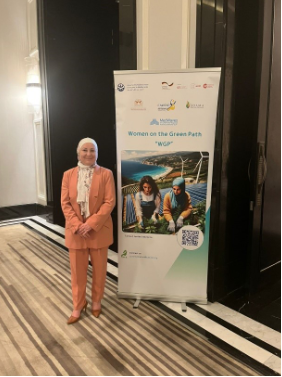
01National Workshop Participation – “Women on the Green Path”
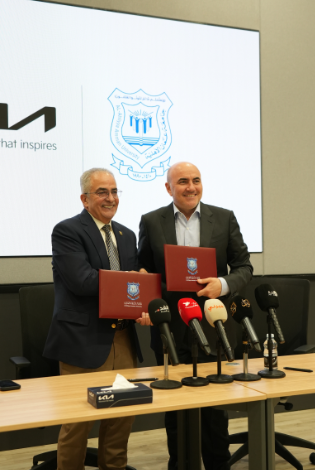
02EV and Clean Mobility Partnership with KIA Jordan
03Smart-Building Demonstration & Policy Awareness Sessions
04Participation in National Scientific Conferences
05Green Architecture & Urban Sustainability Outreach
Impact Evaluation & Development Plan
Performance Evaluation
- AAU provides structured advisory support to government entities through workshops, conferences، and policy consultations.
- Academic experts offer practical guidance on clean-energy planning, green design, and efficient resource management.
- Research centers contribute scientific evidence that informs policy formulation and national sustainability strategies.
- Smart-building and clean-mobility demonstrations provide real-world examples for public-sector adoption.
- University–government collaboration reflects mutual commitment to environmental leadership and national development priorities.
- Activities align with SDG7 and national clean-energy ambitions.
- B. Development Actions
- Action 1: Develop a dedicated Government Advisory Portal that centralizes AAU’s expertise, services، and policy-relevant research.
- Action 2: Publish an annual Government Support & Policy Advisory Report summarizing contributions and policy impacts.
- Action 3: Offer specialized training for government officials on renewable-energy systems, energy auditing، and sustainable-design implementation.
- Action 4: Expand participation in national policy committees and inter-institutional working groups focused on energy efficiency and green development.
- Action 5: Introduce tracking indicators that measure how AAU’s contributions influence policy development and government decision-making.
Benchmarking & Best Practice
Adopted Global Best Practices:- Based on international models for university–government collaboration in sustainable energy and policy innovation. Incorporates best practices from UNESCO, UNDP، and IRENA policy-development frameworks.
- Fully aligned with national energy strategies, public-sector sustainability priorities، and governmental climate-action agendas. Tailored to local environmental conditions، public infrastructure needs، and national development goals.
AAU aims to become a leading national advisory institution supporting government ministries، municipalities، and public agencies in developing advanced clean-energy and efficiency policies.
Institutional Integration Summary
Government support is deeply integrated into AAU’s mission through structured advisory mechanisms, research collaboration، and expert engagement. By providing policy-relevant insights، sustainable-design expertise، and clean-energy demonstrations, the University contributes directly to Jordan’s national sustainability transformation. Through this role, AAU strengthens its alignment with SDG7 and reinforces its leadership in supporting clean-energy policymaking.