Contact Office On
Energy-Efficient Buildings Policy
Policy ensuring that all new constructions and renovations comply with energy efficiency standards.
Introduction
Al-Ahliyya Amman University (AAU) implements a comprehensive Energy-Efficient Buildings Policy that ensures all new constructions, renovations, and facility upgrades adhere to advanced sustainability and clean-energy standards. The policy is fully aligned with SDG7: Affordable and Clean Energy and supports the University’s strategic transition toward a zero-carbon, fully renewable-powered campus.
Energy efficiency is embedded into every stage of AAU’s infrastructure planning, including architectural design, engineering development, material selection, heating and cooling systems, water-use mechanisms, lighting frameworks, and building-automation technologies. All campus buildings are equipped with smart-energy features such as LED lighting, high-efficiency HVAC systems, natural daylighting strategies, zonal and automated lighting controls, air-quality monitoring, occupancy sensors, and seamless integration with renewable-energy systems.
The policy operates in full synergy with other core sustainability frameworks, including:
- Energy Efficiency Standards for New Builds & Renovations Procedure
- Carbon Management and Emissions Reduction Policy
- Sustainable Building & Campus Planning Policy
- Water Consumption & Efficiency Policies
Together, these instruments ensure that AAU’s built environment achieves exceptional performance in energy conservation, operational efficiency, and environmental sustainability, reinforcing the University’s leadership in clean-energy transformation.

Centers and Departments
02Hourani Center for Applied Scientific Research (HCASR
03Center for Innovation and Entrepreneurship (CIE)
04Computer Center
05Faculty of Architecture and Design
Activities
01MoU Between AAU and KIA Jordan – Electric Vehicle Education
02Women on the Green Path – National Workshop Participation
03Scientific Visit to the Green-Certified Ezzat Marji Building
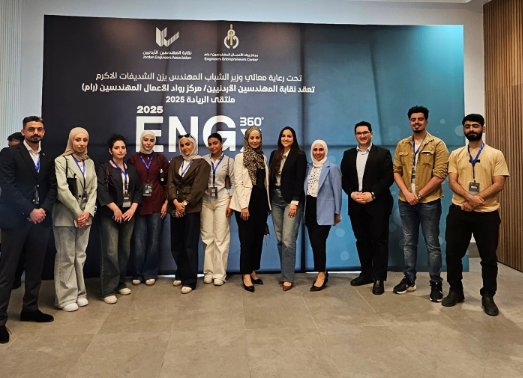
04AAU Participates in the Entrepreneurship Forum ENGx 360
05Engineering Students Win 3rd Place in Arab Water Week Competition
Impact Evaluation & Development Plan
Performance Evaluation
- The Energy-Efficient Buildings Policy is fully documented and operational across all new constructions and renovations.
- AAU’s campus buildings integrate smart-energy systems (LED, BMS, VRF, motion sensors, daylight harvesting, zonal lighting).
- Renovations strictly follow the Energy Efficiency Standards Procedure, ensuring consistency across all facilities.
- Renewable-energy readiness (PV rooftop integration) is included in all engineering designs.
- The policy is publicly accessible, supporting full institutional transparency.
- Compliance is overseen by the Engineering Department, Sustainability Center (SIRC), and the Hourani Center for Applied Scientific Research.
- All standards align with Jordanian construction codes and global sustainability benchmarks.
Development Actions
- Action 1: Digitize and automate the building-efficiency compliance process (submission, review, approval). Action 2: Publish an annual Energy-Efficient Buildings Compliance Report detailing renovations, new buildings, and efficiency upgrades. Action 3: Conduct mandatory training workshops on green-building design, BMS optimization, and low-carbon construction methods. Action 4: Launch a digital platform enabling faculty, engineers, and students to contribute feedback to new building designs. Action 5: Introduce performance indicators to measure building energy savings, HVAC efficiency, lighting performance, and water-efficiency outcomes.
Benchmarking & Best Practice
- Adopted Global Best Practices
- Aligned with ASHRAE, LEED, and UNEP sustainable building standards
- Integration of renewable energy in building design, matching IRENA recommendations
- Use of smart-building technologies consistent with international efficiency benchmarks
- Compliant with Jordanian national building standards
- Supports the Ministry of Higher Education’s sustainability requirements
- Reinforces national clean-energy and zero-carbon goals